“P2 aligns perfectly. The delivery of the program is engaging, mindful of student attention spans, well suited to fit into the school day, and elicits thoughtful responses.”
“The Positivity Project has been an absolute game-changer in terms of helping build a culture not just for students but really for the professionals in the building, to give them an opportunity to work with one another, build relationships, talk to each other, to get to know each other in an authentic way. That's changed my school. It changed the middle school and lifted it into a place where we used P2 not just as a program, but really the lens through which we saw all of the work that we did in our school building.”
“We have changed the way we talk to children. We directly teach them about the value of themselves and how they affect the lives of those around them. This has made a huge impact for the students that we teach — and also for us as teachers.”
“I think the perseverance helped me NEVER to give up. I like how they had videos to show you the lessons. I like the positivity project. I learned to NEVER give up and to try new things.”
“By aligning P2 with PBIS, our character education efforts work alongside our behavior expectations to create a positive school culture rooted in leadership, responsibility, and accountability.”
“It was just enhancing the parents' ability to connect to their children… The Positivity Project is something every parent would want in their household, at the dinner table, in the morning, on the way to school.”
“Our discipline and behavior referrals have declined significantly over the past three years. Words Matter and OPM have shifted Oraze's culture toward kindness.”
It is incredible that the reps from P2 meet with the implementers at the school level and not just me, the district rep. We have a district of 44 schools, so the personalized support is appreciated beyond words.
“We are in the business of changing lives, and partnering with The Positivity Project has rekindled that fire.”
“Our Tier 1 team designs and facilitates these meetings, each centered on a specific P2 character strength such as gratitude, bravery, or kindness.”
“P2 works well for our school because all of the resources are easily accessible and ready to go.”
“Students let words like integrity roll off their tongue and carry themselves with pride throughout our building every single day because P2 is our culture.”
“It gave us shared language for something our staff and families were already trying to do, and focusing on others always brings a positive energy to our campus.”
“Kindergarten students were raising their hands and using the words ‘Integrity,’ ‘Perseverance,’ and ‘Gratitude’…Ms. Saleh's students use these words with such tenacity and it seems so natural to them.”
“P2 has become part of our culture rather than a curriculum we run.”
“At the Academy of St. Joseph, we believe that character education is not just about teaching students how to be good individuals today—it is about shaping who they will become in the years ahead.”
“We have found this to be an incredible way to emphasize our school values while creating a positive school environment.”
“Reading about a character strength in class is one thing. Spending an afternoon doing the work someone else does every day is another.”
“True behavior change is identity change. When your behavior and your identity are fully aligned, you are no longer pursuing change. You are simply acting like the type of person you already believe yourself to be.”
“The vocabulary is the same in a 2nd grade classroom as it is in a 5th grade classroom. That consistency is what makes the difference at a schoolwide level.”
“Our experience with the implementation of P2 has been very positive. Because this is our first year using P2, our staff received PD in the spring, and then again before school started in the fall. These sessions provided our staff with explicit instructions on how to access the weekly lessons, which are very straightforward and teacher-friendly. We look forward to seeing the cumulative effect of teaching our students these character traits.”
“As a P2 leader in my building, I feel I have seen and heard a change in many students because of the program. Students identifying their own strengths, the strengths of others, as well as using the terms in an academic setting proves just how cohesive the program is and the way in which it supports students academically and emotionally in just the right ways!”
“I believe that using P2 has enhanced relationships between students in my class. They are more interested in solving conflicts with each other, forgiving each other and learning to respect each other. I have literally no behavioral issues in my class and I think it's largely due to my consistent use of P2. Students love spending time each day learning about the 24 character strengths.”
“We believe in what works for kids. P2 works for kids.”
“I find Positivity Project a game-changer primarily because it shifts character education from a vague concept to a concrete, daily habit that can be seen and felt throughout my entire building.”
“Based on the quality of conversations we have had with our kids over the last year, I know for sure that P2 is making a difference in how my kids think and feel about themselves and other people. By providing us with a shared vocabulary and a better understanding of the character strengths, P2 has helped our family to have more engaging conversations and a stronger connection with each other.”
“If you have good character, you're going to make it — regardless of if you're not the best speller, or the best mathematician, or the best reader. You have good character. You're going to make it in life.”
“The Positivity Project is definitely something that I think every parent would want in their household. At the dinner table, in the morning on the way to school, just to repeat those things, to talk about them so it becomes a part of their life and their decision-making.”
“P2 offered a clear, practical way to strengthen character and relationships consistently so that we could connect our school goals to a shared approach across the whole community.”
“Four brand-new teachers on my staff didn't skip a beat.”
“Two of my favorite things about the Positivity Project is how accessible it is and how proactive we're able to be. It's accessible because you can reach any student, any grade level, regardless of their background, their culture at home, what their academic capabilities are. Any student is going to be able to access the content and engage with their peers.”
“P2 has transformed the dynamic at D.C. Virgo, promoting a culture of empathy, self-awareness, and positivity. This shift has created a supportive environment where students feel valued and connected, allowing them to focus more on learning.”
“This concept is exactly what students need right now. The focus on other people and interacting with people to find happiness is profound for today's youth.”
“I'm really impressed with the way this program focuses on positivity (I know it's in the name!) and does not fall back on giving examples of poor attitudes and poor behaviors – students already see enough of those in real life, and don't need them reinforced. This is probably one of the better programs I've ever been involved in implementing, and the productive discussions in class are wonderful to see.”
“We have watched kids transform again and again, from disrespectful to respectful, from challenging to cooperative, and from ungrateful to grateful, just by modeling appropriate behavior, sharing learning experiences, and using character strengths to build relationships.”
“There were several comments from parents that, 'My student begs to come to school—even when they're sick.' They don't want to miss class time. They don't want to miss being with their friends. And to me, that's a really strong reflection of the positive relationships that have been built—and that are a part of our culture and foundation at Clovis Elementary—because of the studying that's gone on with The Positivity Project."
“A student who hears about gratitude in a morning meeting, sees it celebrated on our bulletin board, practices it in my lesson, and talks about it at dinner has met that strength four times in a month. That is what a shared language does.”
“One of the most powerful aspects of P2 is that it is structured so students can lead it. Students take ownership of lessons, model leadership, and set positive examples for one another.”
“School-wide, the culture has shifted toward one of understanding and acceptance. With the focus on The Other People Mindset, students are more aware of one another's needs and more willing to offer support. Conversations about behavior are no longer just about rules; they are about character, choices, and growth.”
“We believe that The Positivity Project is a necessary investment not only for our students but also for ourselves as educators and leaders in our community.”
“Nothing is better than a kindergartner being able to use character strength language to tell you their friend wasn't showing integrity, or overhearing a second-grade student say: I lost, but I persevered after losing a race.”
“I can honestly say I have never felt so good about a character education program in my teaching career. I can actually see this program working every day. Each week that we touch on new strengths, we are all reminded of our potential to be better human beings. We have truly seen a transformation in our program since we began using The Positivity Project.”
“The Positivity Project isn't just shaping students—it's shaping our entire community. Together, we're building a school where every strength is valued, and every person feels connected.”
“We all know that school programs come and go, sometimes from one year to the next, but with The Positivity Project (P2), we know every year we will come back to teaching our students how to explore the good in themselves to build better relationships.”
“The data over the past several years has shown that students truly feel that others care about them. The Positivity Project has played such an important role not only in helping individuals grow, but also in helping student friendships and relationships get stronger over the years.”
“The Positivity Project has been a huge benefit for our program this year. We have watched students grow into who they meant to be through learning about the Character Strengths. I have watched them put them into practice in their daily lives, as well as hearing back from parents who have expressed appreciation for the things their children have been learning and teaching at home to the entire family.”
“One of the most amazing things I've ever seen in my 25 years in education is what The Positivity Project did for our school and our students and our staff and our community. I can't say enough about the impact, the positive impact it has had for our educators and our students.”
“You can learn a lot from the Positivity Project. I notice that people have been able to be kind to others and share with others and it has made this world a better place. It is better to have a kind world than to have a mean, negative world. If you feel like you live in a mean, negative world, start doing the Positivity Project.”
“P2 at Capac Elementary is now a part of how we operate every day. The consistency comes from keeping it simple, visible, and connected to real interactions between students and staff.”
“This curriculum is not only enriching his classroom experience but also inspiring him to bring these skills and concepts home to share with his family.”
“Building P2 into daily instruction has shifted the focus from compliance to community. Students feel recognized for the strengths they bring to our environment alongside their academic success. That shared emphasis on character has fostered a more supportive, respectful, and unified school culture in which students are encouraged to grow as learners and as people.”
“What started as an adult-led activity quickly became a student-driven one, showing that our students are practicing and leading with character strengths rather than only learning about them.”
“I've done a lot of research about the impact of social, emotional learning on academics. Not only does it help students from a mental health aspect, they perform better. P2 happens to be a wonderful vehicle and we couldn't be happier to be a partner.”
“This shared vocabulary has improved our school climate, leading to fewer behavioral issues.”
“We have a powerful new vocabulary, which my students and staff understand and consistently use. This produces conversations that are deeper, more nuanced, and more positive than they've ever been before.”
“That 9-point increase is more than a number—it is an encouraging reflection of the intentional work happening across our campus to help students feel that they belong, build positive relationships, and know they are a valued part of the Vista Grande community. P2 has become an important part of that work.”
“We have been inspired with what we have seen in our school community since implementing The Positivity Project. We know that what we are teaching and discussing in our classrooms will forever change the way our students understand, look at, and treat others.”
“I heard repeatedly from parents that their children were begging to come to school, even when they were sick.”
“We have an elementary school with a P2 club. We call them our P2 leaders. I said, you are leaders in this school and it is up to you to help us engage the rest of the kids. So, what can you do to embody these character strengths and to show those real life examples that this is transferable and real?”
"There was some concern because there's always something more being put on our plate that has to be done, and where do we get the time in the day to fit it in? But, it's so easy to teach."
“Often teachers don't want one more thing on their plate, but we say this is the plate to make it easier to carry all of the other demands that are being asked of them during the school day. Now, with just one click, they can find pretty much anything that they want.”
This is an intentional approach to connect students through character strength understanding and education, which positively impacts overall culture and climate.
“There were times my class was just on fire. Those kids who never shared out while we were learning pre-algebra were sharing such deep stories about their lives.”
“When a child can have a conversation with another child instead of running to get an adult, they really started to own the relationships that they were building… and that's what starts to change the culture on the playground and the culture in the classroom.”
“When students actively engage with character education, they begin to see their classmates and teachers as part of a supportive and caring community. This environment reduces bullying and social exclusion, replacing those negative qualities with understanding and inclusivity. Because of this positive school culture at West Pine Middle School, we have seen almost a 10% drop in major office referrals from last year to this year.”
“It is as simple as turning on your computer, putting up that slide deck, and having a conversation with students.”
“Mr. Jones and I used to just talk back and forth. But when he found out my top strength is humor, we started telling each other jokes every day. My relationship with him is so much stronger now because of The Positivity Project.”
“The Positivity Project has the potential to shape the culture of an entire middle school in a way that brings people together, provides identity, and acts as the foundation for many other school efforts. When implemented purposefully and consistently, P2 opens the door to the place students and staff want to be.”
“P2 works well for our school because it is simple, practical, and human. It does not overwhelm teachers with complexity, and it supports the strong instructional practices already in place.”
“Your kindergartner learning about it now, it's going to be engrossed in their language by the time they hit third grade. And that's just going to be part of your everyday conversation like, 'Today, Dad, I was brave. Today I showed compassion.'”
“We have noticed students using character strength vocabulary to describe characters when retelling or summarizing a text.”
“My favorite part about The Positivity Project is the videos because some of them are funny and some of them are kind and I also like the questions because they made me smarter.”
“For staff, P2 has strengthened collaboration and brought greater unity to our campus. … P2 has also supported our adult culture by encouraging staff to recognize strengths in one another, celebrate growth, and problem-solve together.”
“In my opinion, P2 is one of those rare programs that not only became MORE important once we went virtual but also worked as a bridge to provide the connective tissue of familiarity along with an access point to try and help kids and adults alike process their emotions.”
“They are not a vendor in our eyes, but more like a partner. The Positivity Project has made a tremendous impact on our district and community. It has many resources that are easy for our teachers to access. P2 is responsive to any questions we have. They communicate quite effectively and have a personal touch that makes us feel like we are their only customer.”
“More kids are coming to school, more kids are staying in class, and there are better relationships between teachers, students, and families all the way around. It's been a wonderful resource and a small investment for a large yield in terms of outcome.”
“We truly believe in P2 and appreciate the impact it has had on our District.”
“P2 has transformed interactions between our staff and students. It provides common language for staff to utilize with classes, and the Other Person Mindset is essential to teaching our students empathy. Over the past several years, P2 has become embedded in our school culture. It is used daily in each of our 18 classrooms in a variety of ways- during morning meeting, calendar time, or after recess as a transition back into the school day. Getting buy-in from staff to implement additional programming with fidelity can be difficult; however, P2's ease of access and relatable content have eliminated this barrier. Both staff and students look forward to the dedicated daily time. It is the most consistently utilized and implemented character trait/SEL programming that our staff has used in the 11 years I have been in the building.”
“The lessons are easy to follow, require minimal preparation, and let teachers tailor conversations to their students' specific needs. This low-prep structure makes consistent implementation realistic, which is key to long-term success.”
“I have a very special instance in which there was a student out in the playground who was having a rough time. At that moment I was talking with one of our 8th grade students. She approached the student who was having a hard time and invited her to go on the walk with us! But that was not all, she also took the time and invited other students that have the tendency to isolate themselves. As a leader here at KCS, it fills me with pride to see that our students put into practice the virtues they have learned through the year.”
“Parents often share that their children talk about P2 character strengths at the dinner table and reflect on which strengths they are working to demonstrate, hoping to one day earn Citizen of the Week. Those conversations happen at home, organically, without a teacher assigning them, which shows the impact the lessons are having.”
“We're not waiting for a situation to arise to have a teachable moment. We're teaching concepts like integrity before problems happen. It's woven throughout the school year.”
“The seminar was amazing and just what our school needs. All of us cannot wait to start in our classrooms and then we are going to teach our staff. While in the class I was designing the walls of the school to reflect P2!”
“Many students who previously struggled with behavior or peer relationships have made real progress because they now have tools and vocabulary to reflect, reset, and try again.”
“P2 matters to us because it helps students become better learners and better people. Academics are important, but students need strong character and positive relationships to truly succeed. Without P2, our school culture would feel less connected and more reactive. P2 gives us a shared language, a common goal, and a way to intentionally build a positive school community.”
“I have not written a single office referral. Moving from an average of three to five weekly behavior concerns to none has been significant. The overall tone of the classroom feels calmer and more cooperative.”
“Implementing The Positivity Project has caused a shift in student behavior and strengthened our school culture. Students are becoming more intentional with their words and actions, which shows their confidence and emotional awareness. Teachers are using shared character language, leading to clearer communication and a stronger sense of belonging across classrooms.”
“We recognize that academic achievement alone is insufficient for a fulfilling life. Students need self-awareness, an understanding of others, and interpersonal problem-solving skills to face challenges, demonstrate resilience, and contribute positively to society.”
“P2 matters to me because culture drives outcomes. Academic achievement does not happen in isolation. It happens in environments where students feel safe, valued, and connected.”
“The Positivity Project has helped to bring teachers together again and has quite literally provided all the people in our building with something positive.”
“Students absolutely love it when their peers lead the lessons, and some classrooms are allowing students to teach P2 as a reward, further increasing engagement.”
“P2 brought about an immediate impact. I heard countless stories from teachers about their students' efforts to show #PositivityInAction in the school, at home, and in their community.”
“I can walk outside at recess and I can say something, 'Oh, that showed integrity.' And they'll know exactly what we're talking about because we just did it. In fact, this morning, a little guy from third grade, he found money on the playground. And right away, I made it a big deal. And I told him, 'Well, that showed a lot of integrity. You can go give it to Coach P.' And he was so excited because he's like, 'We just learned that.'”
“From day one, new people, they could not make this easier on you. If you want, you can literally read the script that day. It is so beautifully done for you. It's minimal work.”
“I leave a LOT of seminars wishing for my time back. This one, I left and wished I had another day of it all! I think this is going to make a difference one school and one child at a time.”
“If you're looking for a meaningful way to build character, boost achievement, and create a school-wide sense of pride and ownership, I can say confidently: The Positivity Project works.”
“Without P2, our campus would likely be a place where adults settle conflicts, and behavior is handled through discipline alone. What we have instead is a campus where students lead.”
“When I first started at this school, I never heard of the Positivity Project but when I started to hear about the Other People Mindset and I thought about it, I realized that I had been mean to people and I didn't think that it was going to affect people. I apologized and said sorry to the people I had been mean to and from that point on, I thought about people and not to say mean words to them. It has changed me and I believe in second chances.”
“We meet monthly with our Tier 1 team to decide on the following month's challenge based on our school behavioral data.”
“In 31 years of education, 13 of them as an administrator, The Positivity Project has truly risen above and beyond anything I've experienced.”
“When a parent tells us their child used a character strength at home, we know the language has stuck.”
“My son doesn't like weekends very much. He cannot wait for it to be Monday. He loves to learn. He loves to be with his friends. He adores his teachers.”
“By using a shared framework and common language, P2 reinforces the values we want students to develop — such as empathy, responsibility, and resilience — while ensuring consistency across classrooms and schools. This alignment strengthens implementation, supports staff in integrating SEL into daily practice, and ultimately creates a more cohesive and supportive learning environment for students.”
“P2 helps us bring our diverse population together into one supportive family where every student feels seen and valued.”
“Using P2 lessons in my classroom definitely helps my students, but I feel like it also helps me be a better person.”
“For any schools that are getting ready to start P2 or just starting out, there's a couple things that we learned over the last couple years. Just be consistent. As you go, keep looking into more resources. They're all there. Add to it slowly, and over time, you'll find that you're going to come up with your own amazing ideas.”
“Students are increasingly able to identify which character strength they need to build to improve a situation, which reflects both their understanding of the language of character and their willingness to apply it in moments that require reflection and accountability. When a student can name the strength that would have helped, the conversation surrounding the situation has somewhere to go next. That student can start thinking about what they want to do differently, and now they have the vocabulary to move forward.”
“When P2 is implemented consistently, student behavior and peer relationships are stronger.”
“In my 31 years as an educator, I've seen countless character ed programs come and go. This is the first I've experienced that has made a noticeable difference in our schools and amongst our community. Teachers embrace it, students learn and develop from it, and our community is the beneficiary of it.”
“Staff have found the lessons user-friendly, relevant to students, and easy to incorporate into the school day.”
“Teachers are less stressed because they know they can choose when they incorporate P2 into a class, instead of forcing it.”
“These gains represent more than numbers. They reflect stronger relationships, increased trust, and a growing sense of belonging among students who previously felt disconnected. Most importantly, it has reminded us that when students feel seen, valued, and understood, they are far more likely to grow—not just academically, but as people.”
“For us, it is a framework that shapes how students, faculty, and staff operate daily. What started as implementation has become our school culture.”
“We had a guest reader come in this month for March's reading month. He's a local baseball coach for a local semi-professional team and he came in to talk about teamwork and goal setting. One of the kids raised their hand and said, 'You really have to have prudence when you're trying to reach a goal.' He was totally taken aback because he honestly didn't know what she meant by saying prudence. Half the room shot up and wanted to explain what prudence was. He was very impressed with the vocabulary the kids were having about the traits.”
“Although The Positivity Project is designed for easy and quick implementation, its presence is felt in my classroom throughout the entire day. The 24 character strengths vocabulary is now part of my students everyday conversations – and I see it in their writing as well.”
“Our focus on relationships and character development was changing our discussions with students and reducing conflicts during lunch and recess.”
“This simple addition to our playground has strengthened students' understanding of character strengths and reinforced our school's positive culture by embedding P2 into everyday play. We have also reduced our playground office referrals from 36 to 21 since March of the last school year.”
“When they came in, the teacher was listening to them and their concerns, and she said, 'Well, our character trait we're learning about this week is forgiveness. Do you think you girls could sit down and talk through this and use that character strength of forgiveness to work your way through it?' They agreed to it, and they were able to resolve their situation they had.”
“Perseverance and Perspective have been major strengths that helped me handle challenges. Being reminded that things will pass and that I have the ability to grow and learn from them has been incredibly helpful.”
“At this point, if I were to start a school year by announcing that we would no longer be doing P2, I think there would be a revolt; it has become such a fundamental part of what we do and who we have become.”
“We must deliberately and consistently teach our children about character. The P2 has transformed the culture of our building and our community in Homewood.”
P2 gives us an intentional resource and approach that ties together many district-wide initiatives, such as Safety, Restorative Practices, Core Behavior Supports, and Wellness Screeners. These initiatives are meant to create a positive culture and climate, and P2 gives us a resource to help bring all of that together.
"P2 helps create common language throughout the school and ensures alignment and focus on character strengths with students. It spurs other ways for students and staff members to look beyond superficialities and identify true positive traits we want to promote."
"To have a better classroom culture makes the kids comfortable, which means they're going to fight for their teacher. They're going to try a little bit harder. It means they're going to be more invested in their academics."
"I feel like The Positivity Project has really helped kids be able to see another side of the argument, which I feel like goes a lot with perspective. And that can really help with how people argue, which can really help with friendships and make them a lot stronger."
If P2 has changed something in your classroom, your school, or your family, let us know! We're always collecting new voices from current partners. A few sentences are enough; we can take it from there.
Featured Story
Explore more
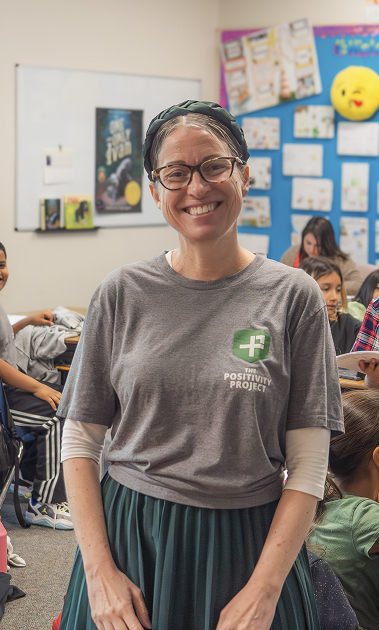
Short- and long-form stories written by the educators who run P2 in their buildings — with the numbers their districts can verify.
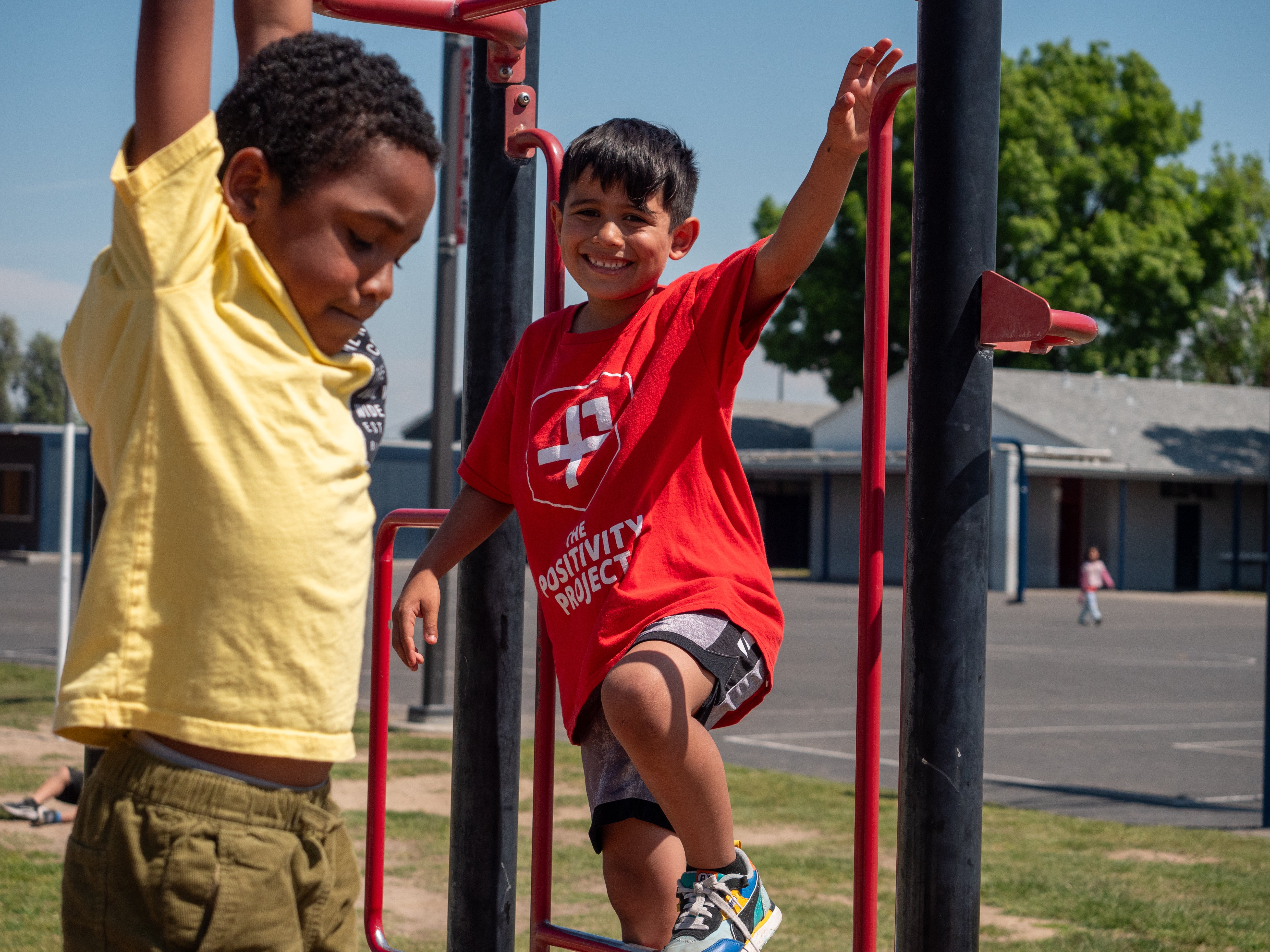
Multi-year, district-level breakdowns of how P2 fits within broader climate, behavior, and culture work.
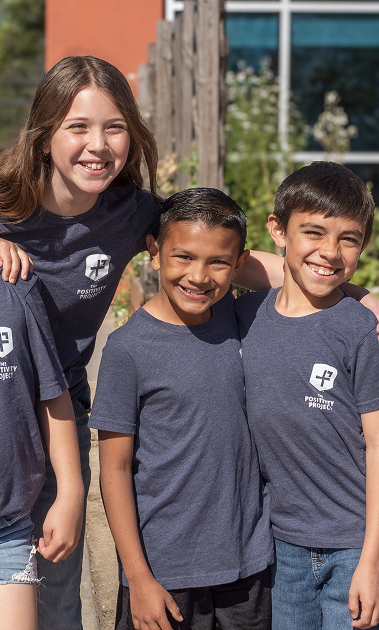
Aggregate findings from across our Partner Schools on behavior, relationships, and engagement.
Frequently asked questions
No. We don't pay contributors for testimonials, and we don't offer credits, discounts, or any other compensation in exchange. Every quote and video is shared voluntarily by an educator, parent, or student at a current or former Partner School.
Yes, with permission. Student voices are some of the most powerful ones we hear, so we include them with first name and grade level only.
Start with our Partner Stories, written by the educators running P2 in their own buildings, then move to our Case Studies for multi-year, district-level analysis. If you want the aggregate numbers across all Partner Schools — behavior, relationships, and engagement — the Impact page pulls those together in one place.
Reach out through our Contact page and tell us what changed in your classroom, school, or family. A few sentences are plenty; we'll follow up if we'd like to turn it into a longer story or a video. We'll always confirm the wording and attribution with you before anything is published.
No. We don't pay contributors for testimonials, and we don't offer credits, discounts, or any other compensation in exchange. Every quote and video is shared voluntarily by an educator, parent, or student at a current or former Partner School.
Yes, with permission. Student voices are some of the most powerful ones we hear, so we include them with first name and grade level only.
Start with our Partner Stories, written by the educators running P2 in their own buildings, then move to our Case Studies for multi-year, district-level analysis. If you want the aggregate numbers across all Partner Schools — behavior, relationships, and engagement — the Impact page pulls those together in one place.
Reach out through our Contact page and tell us what changed in your classroom, school, or family. A few sentences are plenty; we'll follow up if we'd like to turn it into a longer story or a video. We'll always confirm the wording and attribution with you before anything is published.
No. We don't pay contributors for testimonials, and we don't offer credits, discounts, or any other compensation in exchange. Every quote and video is shared voluntarily by an educator, parent, or student at a current or former Partner School.
Yes, with permission. Student voices are some of the most powerful ones we hear, so we include them with first name and grade level only.
Start with our Partner Stories, written by the educators running P2 in their own buildings, then move to our Case Studies for multi-year, district-level analysis. If you want the aggregate numbers across all Partner Schools — behavior, relationships, and engagement — the Impact page pulls those together in one place.
Reach out through our Contact page and tell us what changed in your classroom, school, or family. A few sentences are plenty; we'll follow up if we'd like to turn it into a longer story or a video. We'll always confirm the wording and attribution with you before anything is published.