


Shout-Outs: Recognizing the Good in Others at Mickey Cox Elementary
By Elizabeth PeughThis article was written by Elizabeth Peugh, a kindergarten teacher and Positivity Project (P2) Leader at Mickey Cox Elementary School in the Clovis Unified School District in California. Elizabeth has more than 20 years of experience in early childhood education. Mickey Cox is in its seventh year partnering with The Positivity Project.
This year marks our seventh year partnering with The Positivity Project (P2), and it has been a meaningful stretch of work for Mickey Cox Elementary. When we first introduced the language of character strengths into our school community, our current sixth graders were kindergarteners, five-year-olds learning how to stand in line, share supplies, and make new friends. Today, those same students walk our hallways as leaders, fluent in the vocabulary of character and aware of the good in those around them. P2 has become part of our culture rather than a curriculum we run.
Teaching Students to Recognize Strengths in Each Other
At its heart, P2 teaches that other people matter. That belief has shaped how we approach everything, from morning meetings to classroom discussions to playground conversations. We teach students about the 24 character strengths, and we also help them recognize those strengths in themselves and in others. Over the years, this shared language has strengthened relationships across our campus in ways we could not have imagined when we began.
How Shout-Outs Work
One of the strongest traditions to grow out of our work with P2 is something we call Shout-Outs. We introduced them as a simple way for students and staff to recognize good character in action.
A student or staff member fills out a form identifying who the Shout-Out is for, which of the 24 character strengths the person demonstrated, how they showed that strength, and who the recognition is from. These Shout-Outs are then read aloud during morning announcements so our entire campus can celebrate the good happening in our hallways and classrooms.
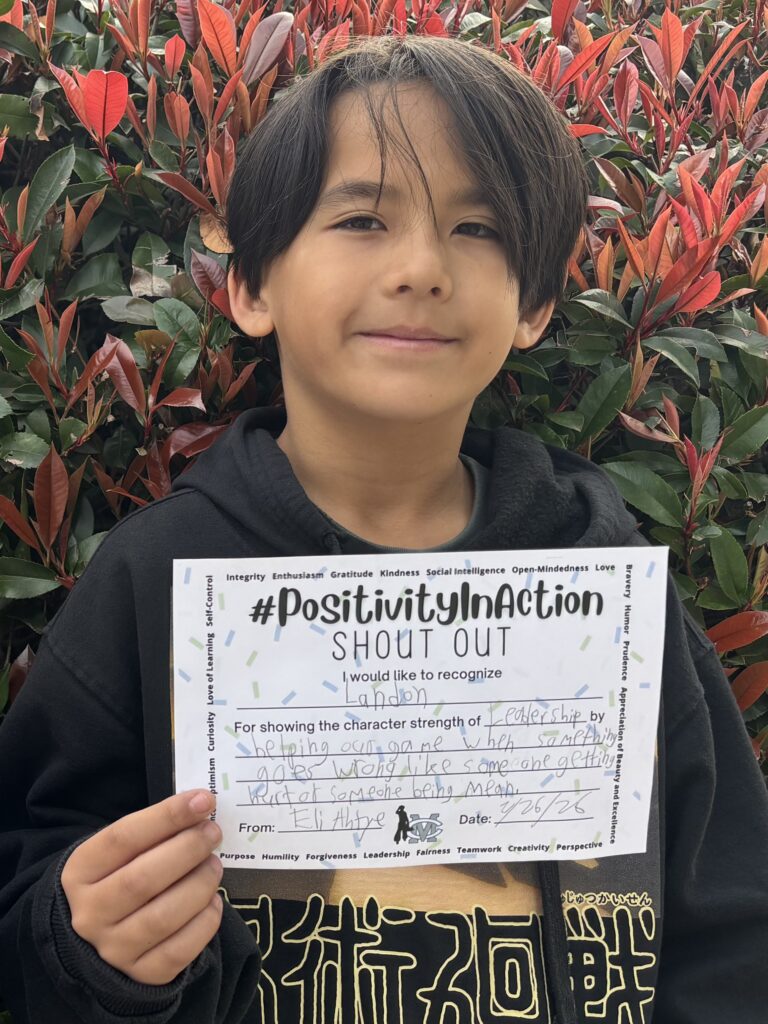
Hand-Delivering the Form
After the announcement, the form is returned to the student or teacher who submitted it so they can personally hand-deliver it to the person they are recognizing. That final step is important. It creates a moment of connection, gratitude, and relationship-building. Over time, these small moments have added up, making kindness, effort, honesty, and courage traits worth noticing and celebrating every day.
What I Hear in the Hallways
As the P2 leader on our campus, I see the effect of this work every day. Students stop me in the hallway because they cannot wait to tell me about a friend’s kindness, bravery, fairness, or teamwork. I receive emails from teachers highlighting perseverance or leadership.
There is something remarkable about hearing a first grader explain that their classmate showed “integrity because they told the truth even when it was hard,” or a fourth grader describing how a friend demonstrated “social intelligence by noticing someone sitting alone at recess and inviting them to play.” Those are specific, thoughtful observations rather than surface-level compliments. Our students are recognizing character, not only learning about it.
Older Students Modeling It for Younger Ones
That ability to appreciate the good in others has changed relationships on our campus. Students are more aware of one another. They look for strengths. They celebrate effort. They acknowledge growth. They understand that every person has strengths, and that everyone brings something valuable to our Cowboy community.
This culture now spans generations of students. Our older students model these behaviors for younger peers, offering encouragement, naming strengths, and showing consideration for others in ways that feel natural. They step into leadership roles with confidence, guided by a shared understanding of what it means to be a good teammate, classmate, and community member. They are proof of what character education looks like over the long term.
Seven Years In
P2 reminds us that building strong relationships begins with recognizing the good in others. When students feel seen for their strengths, they feel valued. When they feel valued, they are more likely to extend that same recognition to someone else. It becomes a cycle of positivity, one that strengthens classrooms, friendships, and our entire school culture.
Like any work worth doing, this takes consistency and commitment. It takes time to build a new framework across an entire campus. It takes modeling from adults and repeated opportunities for students to practice and reflect. Seven years in, we can confidently say the investment has been worth it.
Our Shout-Out forms continue to fill. Our morning announcements continue to highlight kindness, perseverance, leadership, gratitude, and love of learning. Our students continue to surprise us with their depth of insight and sincerity. Walking down our hallways, you can feel it. There is pride here, in character as much as in accomplishments. Our students understand that who they are matters as much as what they do.
As we celebrate seven years with P2, we are grateful for the tools and framework that have helped us build this culture. Even more, we are grateful for the relationships that have grown as a result. On our campus, we notice, name, and celebrate character strengths, and we build stronger relationships because of them. Other people matter, and our students prove that every single day.