

One Character Strength a Week, Every Week at Capac Elementary
By Shannon Aubry-HallThis article was written by Shannon Aubry-Hall, Principal of Capac Elementary in Capac Community School District, located in Michigan. Shannon has spent 27 years in education across a range of roles and grade levels, including the last five as a building administrator. Her background is rooted in literacy, from Title I Reading Coach to Reading Specialist, and she has also taught high school English and special education.
At Capac Elementary, The Positivity Project (P2) has changed the way our school feels each day, and it is something we are proud of.
What started as a character education program has become part of who we are. You can see it in our classrooms, in the hallways, and on the playground. Our students are learning to recognize strengths like kindness, perseverance, and teamwork in themselves and in each other. That shift has made a real difference.
What “Common Language” Actually Sounds Like
Students and staff now share a common language. Instead of generic praise, our staff and students use phrases like:
What strength did you use?
or
I noticed your perseverance there!
We anchor conversations in the 24 character strengths and consistently connect behaviors back to those strengths. Each week, we introduce a new strength during our Monday launch, and classrooms revisit it daily through brief discussions, reflection prompts, or real-life examples.
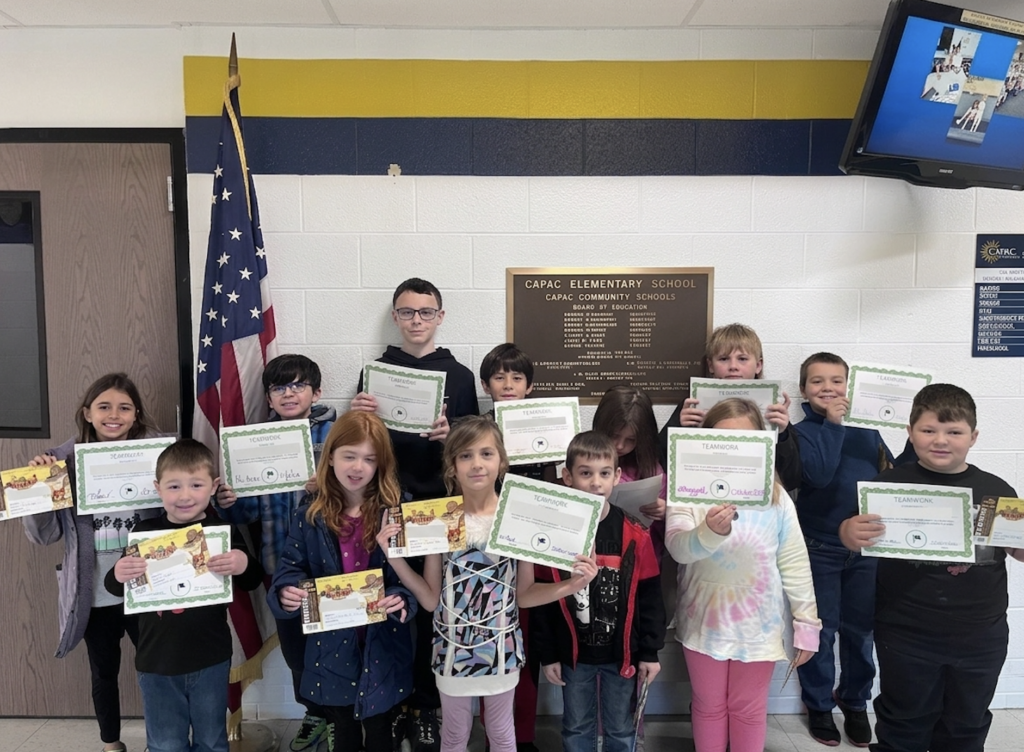
We also use consistent structures like P2 moments, where students share how they or a peer demonstrated the week’s strength. That helps normalize the language across all grade levels.
Fifteen to Twenty Minutes a Day
In terms of scheduling, teachers have flexibility, and there are some common expectations. At the K-6 level, P2 is often built into morning meetings with explicit modeling, read-alouds, role-playing, and character videos. In grades 3 through 5, you will see it in check-ins, writing reflections, or quick discussions during transitions.
Across the building, most classrooms dedicate 15 to 20 minutes daily to P2 work, and the language extends well beyond that time. It shows up in academic instruction, group work, and problem-solving conversations.
Naming the Strength in Real Time
Recognizing and reinforcing character strengths in real time has been key. Staff is encouraged to name the strength when they see it, whether in the hallway, the cafeteria, or on the playground.
We also use visual systems like classroom shout-out boards and our schoolwide Pride Points, which are tied to character strengths. Some teachers incorporate peer recognition, where students can acknowledge classmates for demonstrating a strength.
The goal is immediate, specific feedback that reinforces the behavior and builds student awareness.
Families Using the Same Terminology
Family engagement has been a growing strength for us. We include P2 in our monthly newsletters, explain the character strength, include conversation starters, and suggest ways families can practice it at home. We have also used social media and school events to highlight strengths in action.
During conferences and family nights, we model the language and explain how it connects to student growth. This year specifically, we have started to hear families using the same terminology, which has helped a great deal with consistency between school and home.
Keeping Staff Aligned Over Time
Maintaining alignment requires ongoing attention. As a leader, I provide regular staff refreshers, model practices during meetings, and highlight examples of strong implementation across classrooms.
Instructional rounds and informal walkthroughs help me keep a pulse on consistency. That is not about compliance. It is about celebrating what is working and offering support where it is needed.
I also make space for staff voice. Teachers share ideas, challenges, and successes, which helps keep the work sustainable and grounded in what is actually happening in classrooms.
What We Are Seeing
Our staff has embraced this work wholeheartedly. Teachers are building time into their day to talk about character, model it, and recognize it. Because of that consistency, students know what is expected, and they feel supported.
We have seen students grow in confidence, take more responsibility for their actions, and show more consideration for their peers. The overall tone of our school has become more positive, more respectful, and more connected. Students are encouraging one another, celebrating successes, and working through challenges in more thoughtful ways. Along with addressing mistakes, we are focusing on growth, effort, and what makes each person unique.
P2 at Capac Elementary is now a part of how we operate every day. The consistency comes from keeping it simple, visible, and connected to real interactions between students and staff. It has helped us create something special at Capac Elementary, a place where students feel seen, valued, and encouraged to be their best selves every day. And we are just getting started.