Alignment
P2 is a character education curriculum for Pre-K–12 that teaches 24 character strengths and the five elements of the Other People Mindset. Every P2 Partner School teaches one character strength per week — and the vocabulary and calendar are shared across the whole district. That design serves the frameworks, graduate profiles, academic standards, and funding streams below.
P2 is the Tier 1 universal layer. Proactive, daily, and for every student. A strong Tier 1 lightens the load your Tier 2 and Tier 3 interventions have to carry — and prevention costs less than intervention in both dollars and staff hours. When large numbers of students qualify for intervention, that is a signal to look at what is happening in Tier 1.
P2 also includes a Tier 2 Toolbox for strategic small-group support and a Tier 3 toolbox for counselors and specialists, all built on the same strengths vocabulary students hear in daily lessons.
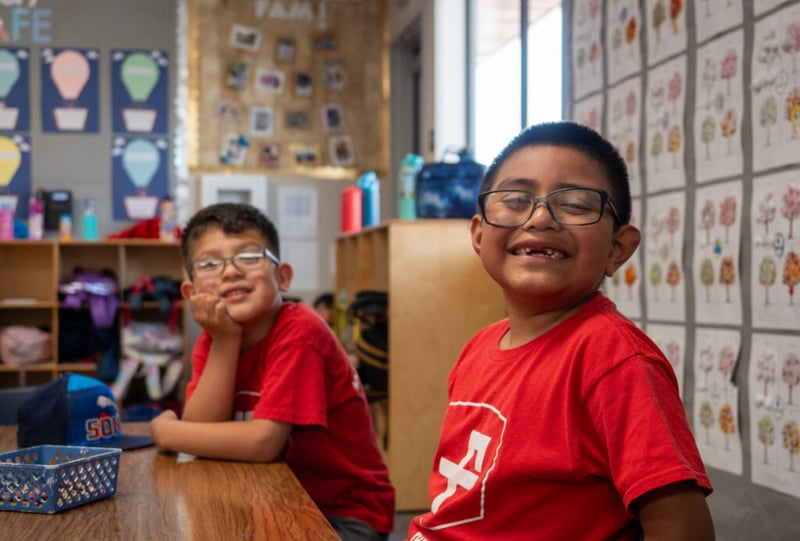
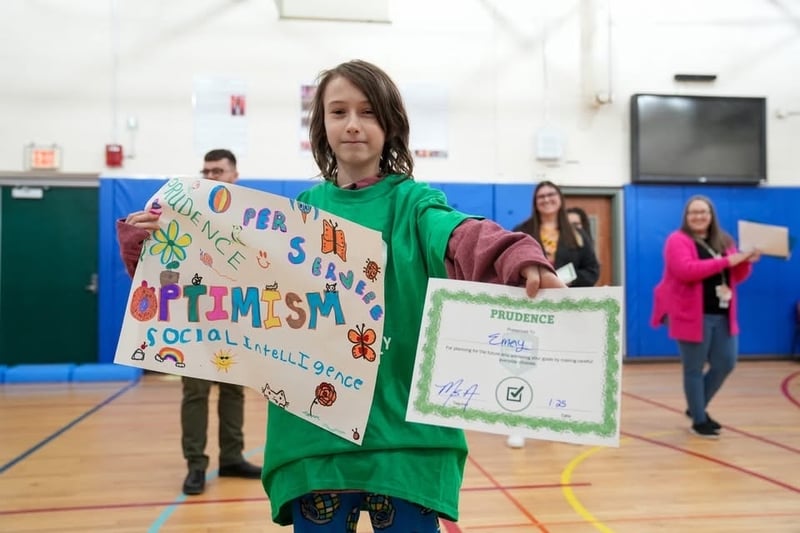
PBIS gives adults a consistent system for expectations, acknowledgment, and data. What it doesn't hand you is the content — the daily instruction that teaches students who they are and why other people matter. P2 supplies that content.
Your matrix says "be respectful." P2 teaches what respect looks like in practice through kindness, fairness, and self-control, giving students and staff one shared language for it. Acknowledgment gets more specific, too: instead of a generic ticket, a teacher names the strength. "Raising your hand when you felt unsure showed bravery."
The Other People Mindset makes the character strengths' vocabulary even more actionable. Students aren't just learning about strengths; they're combining those strengths with practicing five habits of building positive relationships.
Partner District Results
All five schools in Fruitvale School District (Bakersfield, CA) earned California PBIS Coalition recognition for 2025–2026. Kern County Superintendent of Schools reported the district saw fewer discipline referrals and fewer students needing the highest level of behavioral support.
Platinum (highest level) — Endeavour Elementary
Gold — Columbia Elementary, Discovery Elementary
Silver — Quailwood Elementary, Fruitvale Junior High
"This is a really big accomplishment." - Leslie Garrison — Superintendent, Fruitvale School District
Announcing the awards, the district credited The Positivity Project's character work by name — and attributed Endeavour's Platinum to "outstanding parent and community involvement," the same family engagement its principal describes in her P2 story.
Discovery Elementary — chronic absenteeism down 69%, discipline referrals nearly halved
Endeavour Elementary — building family engagement into daily character instruction
Columbia Elementary — one shared character vocabulary, K–6
Awards reported by Kern County Superintendent of Schools and Fruitvale School District.

In peer-reviewed research, P2 reaches 93–94% teacher implementation fidelity, roughly double the K-12 industry norm. 90.9% of teachers want to continue using P2 the following year. The reason is simple: lessons take 15 minutes and are ready-to-use. Open the slide deck and start.

P2's 24 character strengths come from Character Strengths and Virtues, the 800-page classification by Dr. Chris Peterson and Dr. Martin Seligman, identifying strengths found across cultures and throughout human history. Peterson explained that positive psychology could be boiled down to three words: other people matter. The Other People Mindset is how P2 teaches students to live that.

Most character education programs sold at the district level land as a curriculum drop. The contract gets signed, central administration gets the touchpoint, and schools get a binder. P2's Implementation Team delivers personalized support to every individual school because the outcomes that matter happen in classrooms.

P2's 24 character strengths and the Other People Mindset map directly onto every Portrait of a Graduate, district mission statement, and state strategic plan we've seen. It's the daily classroom practice that operationalizes the commitments your district has already made.
No counselor-to-student ratio in the country makes universal well-being support possible, one office at a time. Daily character lessons distribute that work across every adult in the building and build the protective factors research points to: belonging, positive relationships, self-worth, optimism, and gratitude.
West Lake Middle School in North Carolina measured a 33% increase in students' sense of belonging in a single quarter. At Discovery Elementary in California, chronic absenteeism dropped 69%. These are different schools and different measures — but students are more likely to show up to a building where they feel connected.
P2 is not a clinical service and does not replace one. It builds the school-wide culture your counselors are otherwise trying to create by themselves. And, this positive culture helps students who do need clinical support to also have proactive, daily support around them.
The same lessons, organized across grades 9–12 by workplace themes such as communication, professionalism, conflict resolution, work ethic, resume writing, and interview preparation. Each weekly slide deck takes about 10 minutes.
Six attributes, each mapped to the character strengths underneath it: Learner, Critical Thinker, Communicator, Collaborator, Citizen, and Leader. Choose your attributes and your order, or follow the P2 High School Calendar so every grade in the district is on the same strength, the same week. Each weekly slide deck includes three 10-minute lessons. Teach all three during an advisory or homeroom period, or choose one.
Perkins V asks CTE programs to integrate employability skills alongside academic and technical ones. All 24 character strengths are mapped across the 16 National Career Clusters, with primary strengths named for each field, and P2 may be Perkins-eligible as the employability component of a program of study.
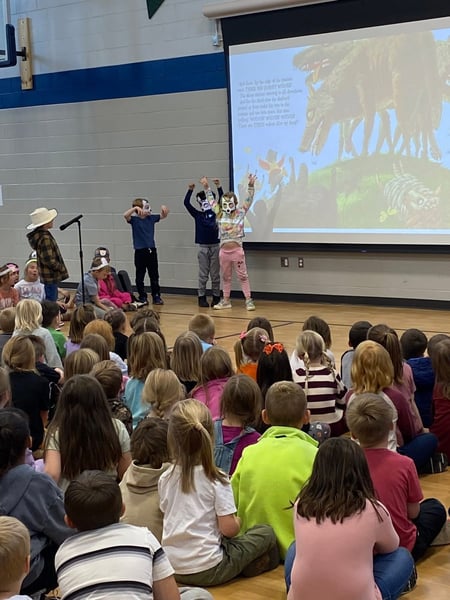
P2 aligns nationwide, with grade-level crosswalks mapping P2 content to national standards across every core subject, Pre-K through 12. Students understand, explain, and apply character strengths through reading, writing, discussion, and reflection, which produces work teachers can assess against standards they already teach. Lessons are ready-to-use and take 10-15 minutes.
P2 is a budget line districts already have.
Because P2 meets ESSA evidence criteria, the cost of a partnership is eligible under the federal streams that require evidence-based status. Districts most often fund P2 through Title I, Title II, and Title IV-A. IDEA funds apply where P2 supports students with disabilities through Tier 2 and Tier 3 use. State grants for school climate, safety, attendance, and student well-being also apply, with requirements that vary by state.
The evidence credential behind the funding eligibility.
P2 meets the criteria for a Tier 2 evidence-based intervention under the Every Student Succeeds Act. Peer-reviewed research shows P2 increases student-teacher relationship quality and significantly reduces both internalizing and externalizing behavior problems compared to control groups.
Implementation held up in that research. P2 teachers achieved 93–94% fidelity, roughly double the industry norm, and 90.9% said they wanted to continue using P2 the following year. Fidelity is the variable that decides whether evidence from a study becomes results in a building.
P2 is a character education curriculum built on the 24 character strengths from positive psychology research. It aligns with SEL frameworks — the strengths give students concrete vocabulary for self-awareness, social awareness, and relationship skills — without asking your district to adopt a new framework.
P2 is a Tier 1 universal curriculum, taught daily to every student. It also includes a Tier 2 Toolbox for small-group support and Tier 3 toolkits for counselors and specialists, all built on the same strengths vocabulary.
Yes. PBIS provides the system for expectations, acknowledgment, and data; P2 provides the daily instruction that fills it. Schools use the strengths vocabulary to make acknowledgment specific rather than generic.
Yes. P2 meets the criteria for a Tier 2 evidence-based intervention under the Every Student Succeeds Act, which keeps it eligible for federal funding streams that require evidence-based status.
Yes. Districts most often fund P2 through Title I, Title II, and Title IV-A. State grants for school climate, safety, attendance, and student well-being also apply.
15 minutes a day in Pre-K–8. In high school, weekly slide decks contain three 10-minute lessons for advisory or homeroom. Lessons are fully prepared and taught by the classroom teacher.
No. P2 is not a clinical service and does not replace one. It builds protective factors — belonging, positive relationships, self-worth, optimism, gratitude — school-wide, which supports the work your counselors are doing.
P2 is a character education curriculum built on the 24 character strengths from positive psychology research. It aligns with SEL frameworks — the strengths give students concrete vocabulary for self-awareness, social awareness, and relationship skills — without asking your district to adopt a new framework.
P2 is a Tier 1 universal curriculum, taught daily to every student. It also includes a Tier 2 Toolbox for small-group support and Tier 3 toolkits for counselors and specialists, all built on the same strengths vocabulary.
Yes. PBIS provides the system for expectations, acknowledgment, and data; P2 provides the daily instruction that fills it. Schools use the strengths vocabulary to make acknowledgment specific rather than generic.
Yes. P2 meets the criteria for a Tier 2 evidence-based intervention under the Every Student Succeeds Act, which keeps it eligible for federal funding streams that require evidence-based status.
Yes. Districts most often fund P2 through Title I, Title II, and Title IV-A. State grants for school climate, safety, attendance, and student well-being also apply.
15 minutes a day in Pre-K–8. In high school, weekly slide decks contain three 10-minute lessons for advisory or homeroom. Lessons are fully prepared and taught by the classroom teacher.
No. P2 is not a clinical service and does not replace one. It builds protective factors — belonging, positive relationships, self-worth, optimism, gratitude — school-wide, which supports the work your counselors are doing.
P2 is a character education curriculum built on the 24 character strengths from positive psychology research. It aligns with SEL frameworks — the strengths give students concrete vocabulary for self-awareness, social awareness, and relationship skills — without asking your district to adopt a new framework.
P2 is a Tier 1 universal curriculum, taught daily to every student. It also includes a Tier 2 Toolbox for small-group support and Tier 3 toolkits for counselors and specialists, all built on the same strengths vocabulary.
Yes. PBIS provides the system for expectations, acknowledgment, and data; P2 provides the daily instruction that fills it. Schools use the strengths vocabulary to make acknowledgment specific rather than generic.
Yes. P2 meets the criteria for a Tier 2 evidence-based intervention under the Every Student Succeeds Act, which keeps it eligible for federal funding streams that require evidence-based status.
Yes. Districts most often fund P2 through Title I, Title II, and Title IV-A. State grants for school climate, safety, attendance, and student well-being also apply.
15 minutes a day in Pre-K–8. In high school, weekly slide decks contain three 10-minute lessons for advisory or homeroom. Lessons are fully prepared and taught by the classroom teacher.
No. P2 is not a clinical service and does not replace one. It builds protective factors — belonging, positive relationships, self-worth, optimism, gratitude — school-wide, which supports the work your counselors are doing.
Every framework on this page measures something that moves when students know their own strengths and treat the people around them well. Behavior, attendance, belonging, and eventually academics.
If P2 does not match the category on your review rubric, put us on the calendar before you rule it out. Fifteen minutes, the same length as one of our lessons, and you will know where P2 sits in your district's structure and how you would pay for it.