

Students Leading Students at Cabarrus-Kannapolis Early College High School
By Gerard CurtisThis article was written by Gerard Curtis, Spanish teacher, Administrative Intern, and volunteer P2 Lead at Cabarrus-Kannapolis Early College High School in Cabarrus County Schools, North Carolina. Gerard began teaching in 2007 after a career as an ABA Certified Paralegal, and he holds a Master of Education in Curriculum and Instruction with a concentration in ESL, along with an Administrator’s License from UNC Pembroke. He leads P2 on a campus where students take high school and college coursework at the same time..
Starting From a Campus That Already Felt Close
The Positivity Project (P2) has had a meaningful and lasting impact on our school culture at Cabarrus-Kannapolis Early College High School. While we were already a close-knit campus, P2 strengthened that bond by helping create a true family environment where students, staff, and families feel valued, heard, and supported. Through P2, students and families gain both the voice and the skills to practice positive character strengths in their daily lives.
Early college students can carry a demanding load, taking high school and college coursework at the same time. The pressure that comes with that schedule can sometimes pull a student’s attention inward. A short character lesson gives our campus a shared moment that has nothing to do with grades or deadlines. That small, consistent block of time has meant more to our school than we ever could have anticipated.
Students Lead the Lessons
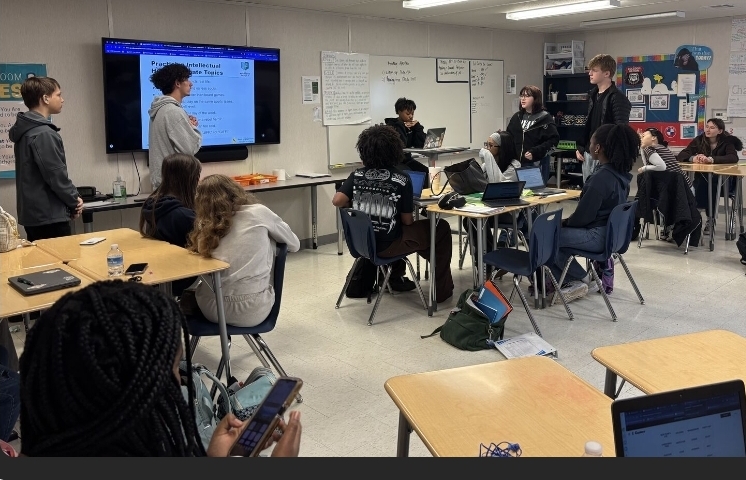
One of the most powerful aspects of P2 is that it is structured so students can lead it. Students take ownership of lessons, model leadership, and set positive examples for one another. This approach allows underclassmen to engage meaningfully with upperclassmen, encourages collaboration across grade levels, and reinforces the idea that every student can be a role model.
When a student leads the lesson, the message comes from a peer instead of an adult. An underclassman hears about a character strength from an upperclassman who is further along in his or her coursework. The upperclassman has to understand that strength well enough to explain it out loud, so both students get something out of the same lesson. Students who might not otherwise speak up in front of their peers get regular, low-stakes practice doing exactly that.
Character Strengths You Can See
Banners, signs, wristbands, and other visual reminders keep P2 character strengths in front of students, staff, and families from the moment they enter our campus. These reminders emphasize the work students are doing. A student who views the same character strength all week in different spots sees the word dozens of times before anyone asks them to use it, so it already sounds familiar by the time it comes up in conversation.
How the Other People Mindset Showed Up in a Hard Week
P2 also meets the unique needs of our school by providing a shared language and framework for reflection, growth, and connection. One moment stands out. A student was going through a stressful and challenging period in their life. Drawing on the P2 lesson on the Other People Mindset (OPM), the student applied OPM in a real situation by reflecting on how their actions affected others, opening up for support, and working collaboratively toward a solution. Through praise, encouragement, and honest communication, everyone involved felt heard, appreciated, and uplifted.
OPM asks students to stop seeing a situation only from their own point of view and to start considering how it looks to the people around them. That shift is hard for anyone, and it is hardest in the middle of a hard week. What stayed with our staff is that this student made the shift without an adult prompting it. They already had the language when they needed it.
One Lesson, Carried Beyond the Classroom
This experience traveled through our student body as an example of how a single P2 lesson can reach far beyond the classroom. It reinforced resilience and problem-solving, while preparing our students as future leaders of our communities to face challenges with strength, understanding, and compassion for themselves and those around them.
The idea of shared character language has taken hold on our campus. It shows up most clearly in the moments that weren’t planned, like when a student reaches for a strength on their own because that is how people here simply talk to one another. That is what we hope continues as each new class arrives.