Alignment

High school career readiness, grounded in character

P2's high school resources connect the 24 character strengths to the skills employers want. 

The most common thing we hear from high school leaders is that their teachers have no room for another daily curriculum. That is a fair objection. A 15-minute daily lesson works in an elementary building. High school has bell schedules, A/B rotations, block periods, and advisory windows that shift by day.

P2's high school resources were built to fit the schedule you already have. There is no new course to adopt, no period to carve out, and no training to complete before a teacher can open the first lesson.

Three ways into the same resources

Every high school runs differently, and the goal a school is trying to achieve should shape how it uses P2. There are three entry points, drawing on the same lessons, organized three ways.

calendar-green

P2 High School Calendar

The new High School Calendar intentionally follows the same week-by-week sequence as P2's nationwide Pre-K–12 calendar, so a senior and a second grader discuss the same strength in the same week. Each week pairs a Portrait of a Graduate attribute with its character strength or Other People Mindset element. Curiosity on the nationwide calendar becomes Exploratory Thinking (Curiosity) at the high school level. Districts already running P2 are not starting over. They are adding a high-school-ready layer to a foundation students have had for years.

Best for: districts that want one shared sequence across every grade band.

camera-green

P2 Portrait of a Graduate

The same lessons, reorganized by the six attributes: Learner, Critical Thinker, Communicator, Collaborator, Citizen, and Leader. Each is mapped to the character strengths and Other People Mindset elements underneath it, so a school chooses which attributes to emphasize and in what order.

Best for: schools and districts that lead with their own Portrait of a Graduate.

tool-green

P2 Career Readiness Toolbox

The career side of the collection is organized by workplace theme like communication, professionalism, conflict resolution, work ethic, resume writing, and interview preparation, and sequenced across grades 9–12. A ninth grader works on the first impression they make walking into an interview. By twelfth grade, they are writing the follow-up email and deciding what belongs in it.

Best for: CTE pathways, business classes, and other programs designed to strengthen life and career readiness.

Exploratory thinking slide deck cover inside a P2 career readiness lesson
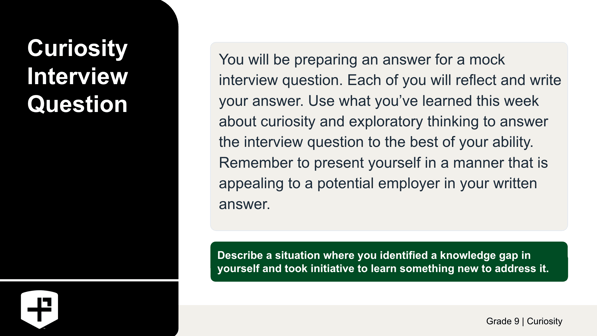
Curiosity interview question on a slide deck inside a P2 career readiness lesson

Inside a career readiness lesson

Every lesson is an off-the-shelf slide deck. A teacher opens it and teaches.

Each deck opens the same way, by defining the Portrait of a Graduate attribute and the character strength behind it. In Grade 9 Exploratory Thinking (Curiosity), students learn that curiosity is what moves them to ask questions, chase new ideas, and look past what they already know. That shared definition gives the room one starting language.

From there, the deck opens into three components, each built to run in about 10 minutes.

1. Discussion

Students watch a short video and work through questions as a class. An abstract word becomes something they can point at and name.

2. Activity

Students engage with a hands-on or collaborative activity that enhances understanding. Where the strength becomes something students do rather than something they define.

3. Career Readiness Activity

Students expand their thinking beyond the classroom, the bridge to the working world. Curiosity stops being vocabulary and becomes a hiring signal: the student who asks good questions, adapts when the job changes, and finds the path nobody handed them.

1. Discussion

Students watch a short video and work through questions as a class. An abstract word becomes something they can point at and name.

2. Activity

Students engage with a hands-on or collaborative activity that enhances understanding. Where the strength becomes something students do rather than something they define.

3. Career Readiness Activity

Students expand their thinking beyond the classroom, the bridge to the working world. Curiosity stops being vocabulary and becomes a hiring signal: the student who asks good questions, adapts when the job changes, and finds the path nobody handed them.

1. Discussion

Students watch a short video and work through questions as a class. An abstract word becomes something they can point at and name.

2. Activity

Students engage with a hands-on or collaborative activity that enhances understanding. Where the strength becomes something students do rather than something they define.

3. Career Readiness Activity

Students expand their thinking beyond the classroom, the bridge to the working world. Curiosity stops being vocabulary and becomes a hiring signal: the student who asks good questions, adapts when the job changes, and finds the path nobody handed them.

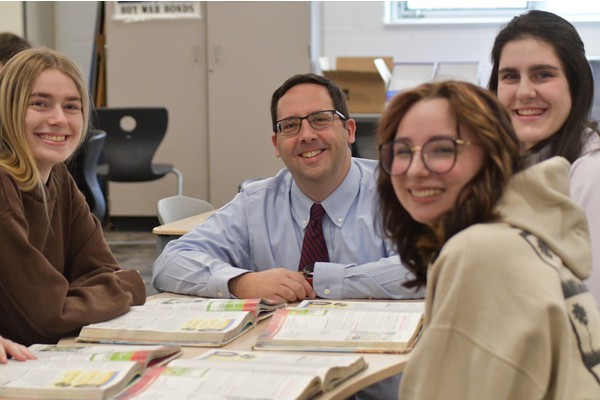
Lake Shore Public School students sitting around table

Why it fits a real high school schedule

It uses the time you already hold.

These lessons are built for the advisory or homeroom window most high schools already run.

We curated so teachers don't have to.

Handing a busy high school teacher a library of two hundred resources is the fastest way to stall character work. P2's curriculum team, made up of former classroom teachers and principals, chose and sequenced the strongest lesson for each week. When a teacher opens the calendar, the answer to "what am I teaching?" is already on the screen.

No specialized training is required.

The structure repeats week to week, and the resources are ready to use, so these lessons are taught confidently by educators who already know these students.

If you teach a CTE pathway

The Career Readiness Toolbox is the entry point most CTE instructors use, and it maps to the employability skills your pathway is already accountable for.

Character and career are the same student

Character education and career readiness get treated as two initiatives with two budget lines. They are two views of the same young person.

The Portrait of a Graduate side shapes the human: curious, resilient, self-aware, someone worth working alongside. The career-readiness side shapes the professional: someone who can take feedback, resolve a conflict, follow through, and tell their own story in an interview. Technical skill is what gets a young person hired. The human skills are what keep them employed. Most of us have met the technician who can fix anything and cannot talk to a customer, and that gap is what these lessons are built to close.

Every weekly lesson connects a character strength to its use in a workplace on purpose. The curiosity a student practices on Wednesday is the curiosity they describe to an employer on Friday.


Common questions about P2's career readiness resources

How much class time does this take?

You choose what works with your schedule: a 10-, 20-, or 30-minute lesson. A school with a dedicated advisory or homeroom block can run all three 10-minute lessons back-to-back for a 30-minute weekly lesson. A school without that window has each teacher choose one or two 10-minute lessons per week. Take them à la carte.

Is this a separate course or an elective?

No. These are weekly lessons designed for advisory or homeroom time high schools already hold. P2 offers a high school elective for schools that want a full-length option, but these resources do not require one.

How is this different from a standard career readiness curriculum?

Most career readiness materials teach the mechanics: build a resume, practice an interview, write a professional email. P2 teaches those mechanics on top of the character strength underneath them. A student learns what perspective looks like at work, then writes the follow-up email. The behavior holds because the student understands what it is made of.

What training do teachers need?

None specific to these resources. Every deck follows the same structure, the content is written for a general educator rather than a specialist, and there is no preparation between opening the file and teaching. Partner schools also receive onboarding and ongoing training as part of the partnership.

How much class time does this take?

You choose what works with your schedule: a 10-, 20-, or 30-minute lesson. A school with a dedicated advisory or homeroom block can run all three 10-minute lessons back-to-back for a 30-minute weekly lesson. A school without that window has each teacher choose one or two 10-minute lessons per week. Take them à la carte.

Is this a separate course or an elective?

No. These are weekly lessons designed for advisory or homeroom time high schools already hold. P2 offers a high school elective for schools that want a full-length option, but these resources do not require one.

How is this different from a standard career readiness curriculum?

Most career readiness materials teach the mechanics: build a resume, practice an interview, write a professional email. P2 teaches those mechanics on top of the character strength underneath them. A student learns what perspective looks like at work, then writes the follow-up email. The behavior holds because the student understands what it is made of.

What training do teachers need?

None specific to these resources. Every deck follows the same structure, the content is written for a general educator rather than a specialist, and there is no preparation between opening the file and teaching. Partner schools also receive onboarding and ongoing training as part of the partnership.

How much class time does this take?

You choose what works with your schedule: a 10-, 20-, or 30-minute lesson. A school with a dedicated advisory or homeroom block can run all three 10-minute lessons back-to-back for a 30-minute weekly lesson. A school without that window has each teacher choose one or two 10-minute lessons per week. Take them à la carte.

Is this a separate course or an elective?

No. These are weekly lessons designed for advisory or homeroom time high schools already hold. P2 offers a high school elective for schools that want a full-length option, but these resources do not require one.

How is this different from a standard career readiness curriculum?

Most career readiness materials teach the mechanics: build a resume, practice an interview, write a professional email. P2 teaches those mechanics on top of the character strength underneath them. A student learns what perspective looks like at work, then writes the follow-up email. The behavior holds because the student understands what it is made of.

What training do teachers need?

None specific to these resources. Every deck follows the same structure, the content is written for a general educator rather than a specialist, and there is no preparation between opening the file and teaching. Partner schools also receive onboarding and ongoing training as part of the partnership.

Get started

For current P2 Partners, all three paths are in the Resource Library alongside the Resource Guide.

If you are new to P2, start with the free lessons. When you want the full collection, run a free pilot and watch what changes in how students talk to each other.


Read success stories from P2 Partner high schools