This article was written by Katie McNally, a math teacher and P2 Coordinator at Farnsworth Middle School in the Guilderland Central School District in Guilderland, New York. Katie has taught for more than a decade, served on the district's Social-Emotional Learning Advisory Committee during the COVID-19 pandemic, and has coordinated P2 at Farnsworth since September 2021; she also leads the math department and co-coordinates the school's new teacher mentoring program. Farnsworth serves roughly 1,150 students in grades 6–8 and became a P2 Partner School in 2021–22.
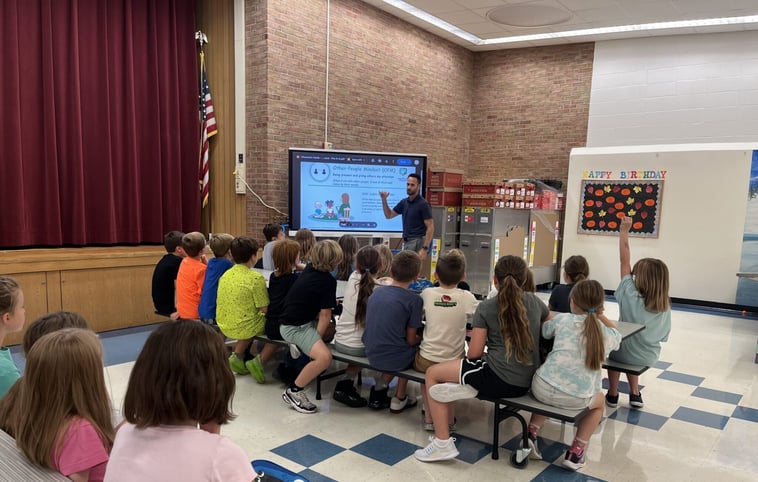
Farnsworth Middle School (FMS) in Guilderland, NY became a P2 Partner School in the 2021-22 school year. Our schedule didn’t have a time in the day like “morning meeting” where P2 lessons could be taught, so we chose to integrate P2 lessons into all classes across the building. During our first year, we ran the traditional P2 calendar and assigned the weekly character strengths to different subject areas each week on a rotating basis. Teachers were asked to teach a P2 lesson every day for their assigned weeks.
Creating a Flexible, Customized P2 Calendar
We received feedback from teachers that they were finding scheduling to be a challenge. For example, if a teacher was giving a test during one of their P2 weeks and they needed the full period/block for that assessment, then they wouldn’t have the 15 minutes available to teach their P2 lesson that day. The question was asked:
How could we ensure students learn about all the character strengths over the course of the year, while providing teachers with the flexibility they needed?
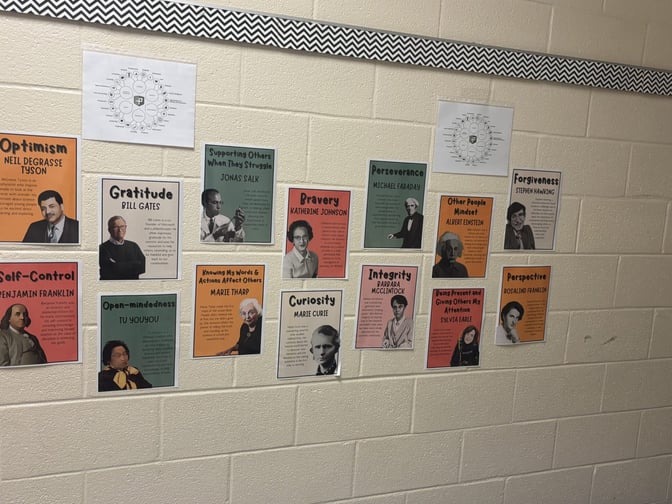
In 2022-23, we created our own P2 calendar, assigning traits by marking periods to each subject area. Teachers were asked to teach the five lessons about their strength over the course of the marking period, but exactly when they chose to do it was up to them. Classes with shorter instructional periods were given a semester instead of just a quarter to teach their lessons. Classes that were only a quarter or semester long would repeat their given strength(s) with each new group of students as the year went on. We tried, as much as we could, to assign traits that lend themselves well to each subject area; for example, creativity in Art, curiosity in Science, and teamwork in Physical Education.
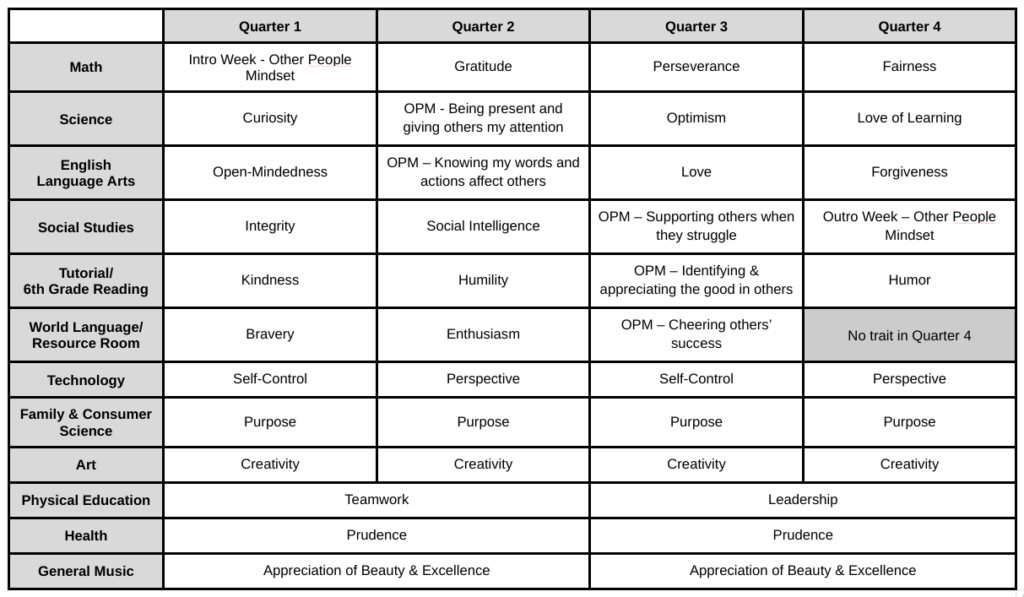
As a result, students learn all the P2 character strengths and get consistent exposure to the common language of P2, but teachers have the flexibility they need. A student might go a few days without a P2 lesson, but another day they might get two in different classes. Teachers are less stressed because they know they can choose when they incorporate P2 into a class, instead of forcing it. We adjust the calendar as needed each year, but are now in our third year of using this model.
Finding the Right Fit for P2
 We also incorporated P2 into existing character education programs in our building. Before becoming a P2 partner school, we would have grade-level assemblies twice a year where we highlighted the six pillars of character and recognized students with awards for outstanding character, including giving them a t-shirt. Now our assemblies highlight a character strength or component of the Other People Mindset. We ask faculty and/or student speakers to share what it means to them and how we can all demonstrate those character strengths to make FMS a better place. Students are still recognized with character awards (called Farnsworthy awards), but now the nomination process involves selecting the P2 character strengths that the nominees demonstrate, and those character strengths are put right on the award certificate.
It was remarkable to see how P2 could be woven into so many of our existing programs and traditions!

Katie McNally
Katie McNally is a math teacher at Farnsworth Middle School with over a decade of experience. She served on her district’s Social-Emotional Learning Advisory Committee during the COVID-19 Pandemic, and then became the P2 Coordinator for her school starting in September 2021. She also serves as the math department teacher leader and co-coordinator of the new teacher mentoring program.