How it works
The Positivity Project (P2) gives families simple ways to reinforce the character strengths and relationship skills children are learning at school — through quick conversations and hands-on activities you can do together.
Free • Pre-K–12 • No login required • Open to every family
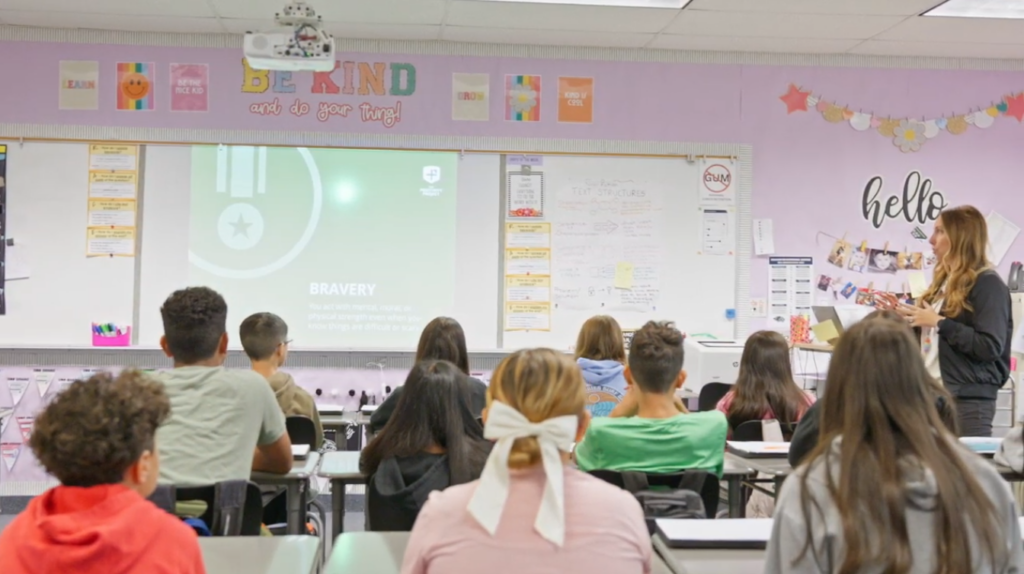
P2 gives students a shared vocabulary for 24 character strengths — from gratitude and perseverance to teamwork and self-control.
Lessons are written by grade level, so students explore the same ideas in ways that make sense for their age.
Alongside the strengths, P2 teaches five habits that make relationships work:
These ideas also appear in P2 for Families, giving families a shared language to use at home.
P2 for Families follows a 1-1-3 model: one quote, one short video, and three questions for every character strength. Content is grouped into five grade bands (Pre-K–K, 1–2, 3–5, 6–8, and 9–12), so pick your child's band and open that week's strength.
Every P2 for Families page also includes a printable, screen-free activity that helps families put the week's character strength into practice together.
For even more inspiration, read a parent’s blog: 6 Ways to Connect P2 to the Home →
When families use the same words as school (e.g., kindness, self-control), kids understand expectations clearly.
Short, consistent touchpoints beat long, irregular efforts.
By focusing on each child’s strengths, families and schools can nurture confidence and empathy together.
When families use the same words as school (e.g., kindness, self-control), kids understand expectations clearly.
Short, consistent touchpoints beat long, irregular efforts.
By focusing on each child’s strengths, families and schools can nurture confidence and empathy together.
When families use the same words as school (e.g., kindness, self-control), kids understand expectations clearly.
Short, consistent touchpoints beat long, irregular efforts.
By focusing on each child’s strengths, families and schools can nurture confidence and empathy together.
School drop-off line
Walk to the bus stop
Dinner table
Bedtime tuck-in
In the car after practice
Waiting room / sideline
Grocery line
Weekend breakfast
During a walk or dog duty
Text your teen: “Where did you notice gratitude today?”
Kids using strength words in real life: “I showed perseverance on my project.”
Smoother family problem-solving: “What strength do we need right now?”
Better teamwork on chores, sports, and schoolwork.
Watch how parents, teachers, and students describe the difference P2 makes — and why kids don’t want to miss a day of school.
Sign up for the P2 for Families newsletter and get simple, meaningful ways to grow character at home. You’ll receive character strength conversation starters, activities, and practical tips to help your family build a shared language of character and connection.
Subscribe to our weekly Parent Newsletter.
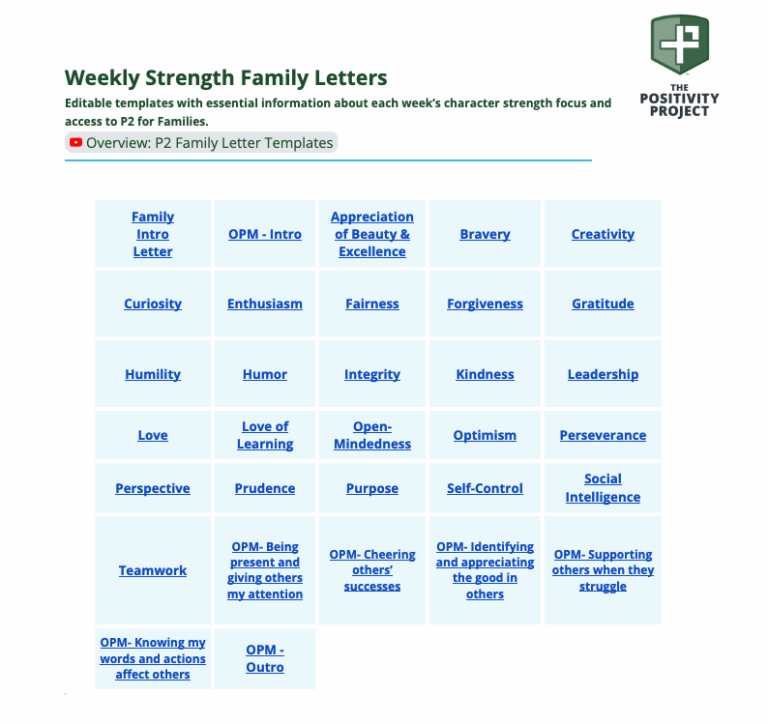
Ask your child’s teacher or principal for the Weekly P2 Family Letters that explain each character strength and Other People Mindset element in more depth.
Share a win: tell your child’s teacher when you notice a strength at home.
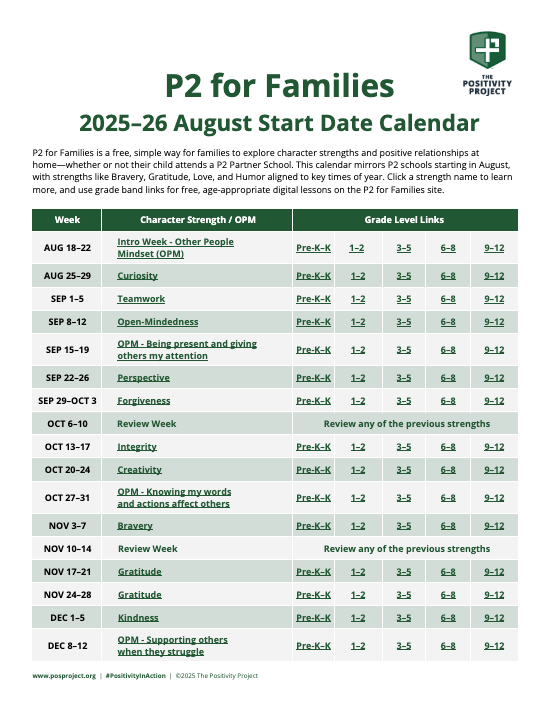
You can still use P2 for Families at home—free and public.
Subscribe to our weekly Parent Newsletter.
If you’re interested in bringing P2 to your school, share this page with your principal or counselor.
For a deeper overview, download our Parent Letter →
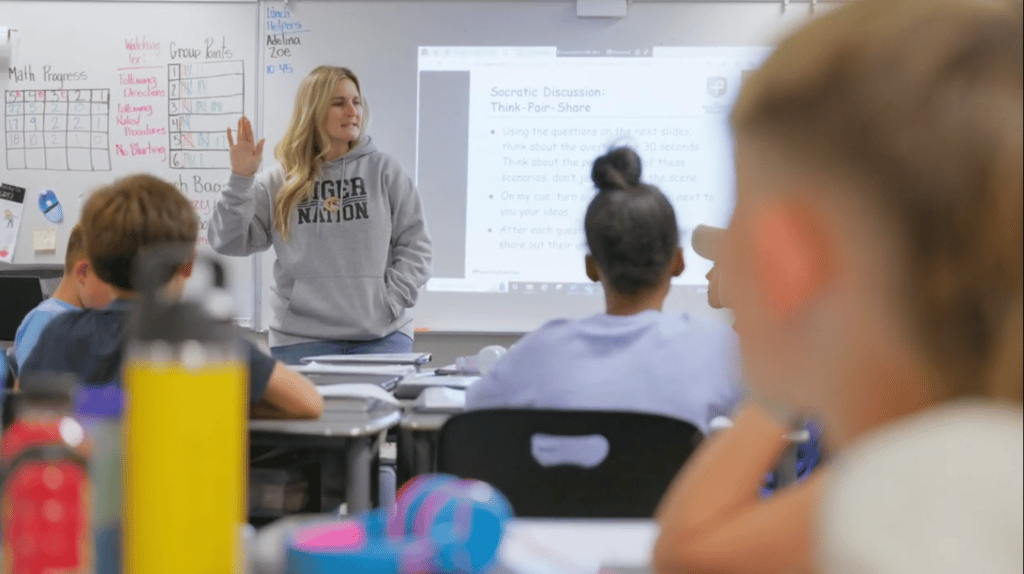
If your child comes home talking about daily lessons on “character strengths” or the “Other People Mindset,” your school may already be a Partner. To be sure, just ask your child’s teacher or principal.
The P2 for Families resources will align week-by-week with what your child is learning at school.
You can still follow the P2 for Families calendar at home as a standalone, free resource—and share this page with your school leader if you’d like to see P2 adopted.
Privacy and access
P2 for Families is public and does not require a login. No ads. No student data collection. Just simple weekly pages you can open on any device.
What is the cost?
Ask curious questions, not quizzes: “Where did you see gratitude today?”
Spot-and-name strengths: “You showed teamwork helping your sister.”
Tie strengths to real choices: “What would prudence look like before practice?”
Celebrate process, not perfection.
Want to know your own top character strengths? Try our free Character Strengths Snapshot Surveys →
About 5–10 minutes once a week at home—more if you enjoy it.
PreK–12, with grade-banded content.
No problem. Jump back in. Strengths are revisited across the year.
No. This is designed to reduce stress by giving you a vocabulary and easy prompts to talk about character with your kids. Use the one-prompt rule and the car-ride rule: one question, on the way somewhere.
We keep it simple: P2 is a character education program—with the added benefit of aligning to SEL standards in many states. Families use clear, practical language—not jargon—so kids and parents can use these words naturally in daily life and carry them forward for a lifetime.
No accounts needed for Families content.
Yes. Many teams use the same weekly strength as a two-minute huddle.
P2 is built on the well-established 24 character strengths framework and a decade of implementation in urban, suburban, and rural communities in public, private, charter, and home schools nationwide. See the research here.
Families of many backgrounds use P2 because character and relationships are universal.
Open this week’s P2 for Families page, choose a strength, and try it tonight.
About 5–10 minutes once a week at home—more if you enjoy it.
PreK–12, with grade-banded content.
No problem. Jump back in. Strengths are revisited across the year.
No. This is designed to reduce stress by giving you a vocabulary and easy prompts to talk about character with your kids. Use the one-prompt rule and the car-ride rule: one question, on the way somewhere.
We keep it simple: P2 is a character education program—with the added benefit of aligning to SEL standards in many states. Families use clear, practical language—not jargon—so kids and parents can use these words naturally in daily life and carry them forward for a lifetime.
No accounts needed for Families content.
Yes. Many teams use the same weekly strength as a two-minute huddle.
P2 is built on the well-established 24 character strengths framework and a decade of implementation in urban, suburban, and rural communities in public, private, charter, and home schools nationwide. See the research here.
Families of many backgrounds use P2 because character and relationships are universal.
Open this week’s P2 for Families page, choose a strength, and try it tonight.
About 5–10 minutes once a week at home—more if you enjoy it.
PreK–12, with grade-banded content.
No problem. Jump back in. Strengths are revisited across the year.
No. This is designed to reduce stress by giving you a vocabulary and easy prompts to talk about character with your kids. Use the one-prompt rule and the car-ride rule: one question, on the way somewhere.
We keep it simple: P2 is a character education program—with the added benefit of aligning to SEL standards in many states. Families use clear, practical language—not jargon—so kids and parents can use these words naturally in daily life and carry them forward for a lifetime.
No accounts needed for Families content.
Yes. Many teams use the same weekly strength as a two-minute huddle.
P2 is built on the well-established 24 character strengths framework and a decade of implementation in urban, suburban, and rural communities in public, private, charter, and home schools nationwide. See the research here.
Families of many backgrounds use P2 because character and relationships are universal.
Open this week’s P2 for Families page, choose a strength, and try it tonight.
Share a quick story with your teacher or principal about a character strength you saw this week.
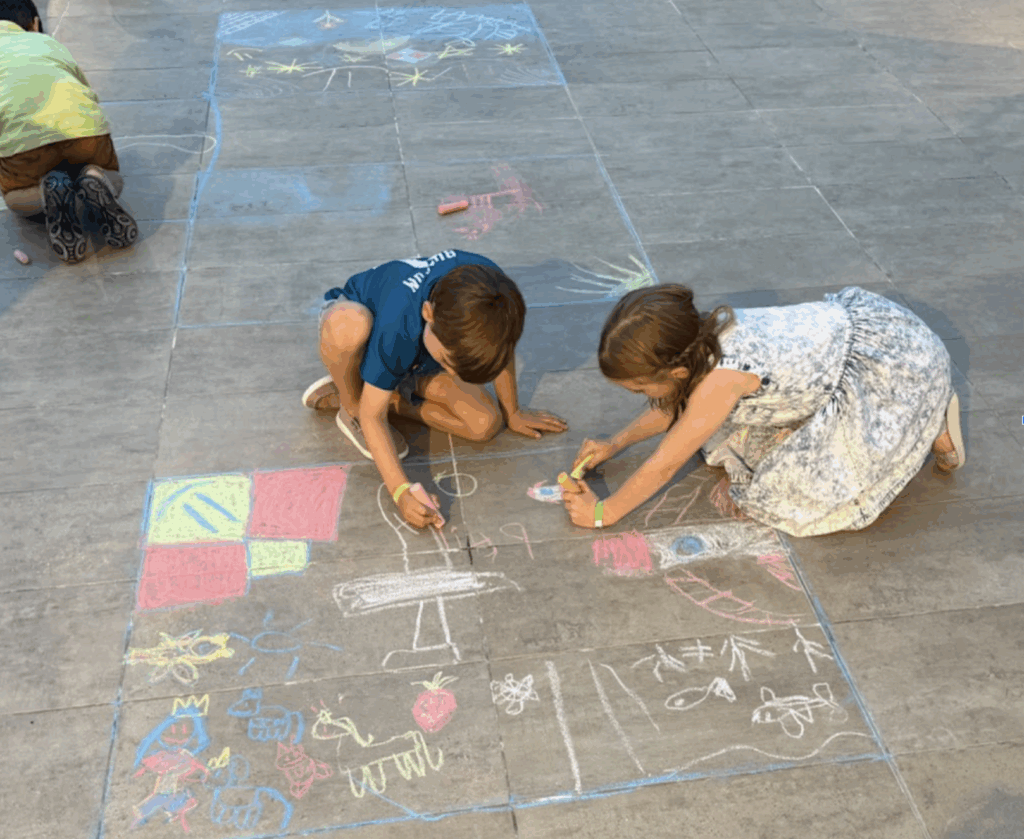
Post a photo of a family strength-spotting moment (no faces needed) with #PositivityInAction.
Kids listen most when they feel seen. A two-minute, strengths-based conversation can change the tone of a whole week.