West Lake Middle School, North Carolina · One semester of P2 lessons changed how students thought about their place in the school, with more of them answering yes to this climate survey question: Do I belong here?
Palms Elementary, Michigan · After implementing P2 schoolwide, Palms saw academic gains alongside a positive impact on school culture, which is the kind of result that grabs a principal's attention.
Lobbestael Elementary, Michigan · Fewer office referrals, fewer suspensions, more students solving problems on their own. At Lobbestael, character strengths are taught before the problems start.
Discovery Elementary, California · Four years into daily P2 lessons, chronic absenteeism has fallen from 17.7% to 5.5%. Principal Eva Martinez calls it the simplest measure of whether students want to be in the building.
The foundation
Most programs are built on a values list, not research.
Positive psychology’s 24 character strengths serve as our foundation. Ranging from bravery and perseverance to integrity and gratitude, the character strengths are classified and described in the 800-page book Character Strengths and Virtues, co-authored by Drs. Chris Peterson and Martin Seligman. These strengths aren’t about ignoring the negative. Instead, they help us overcome life’s inevitable adversities. P2’s curriculum teaches one character strength per week, giving students the language to understand these strengths in themselves and others.
You notice and value the world’s beauty and people’s skills. You don’t take things for granted.
You act with mental, moral, or physical strength even when you know things are difficult or scary.
You come up with new and original ways to think about and do things.
You like exploration and discovery. You ask lots of questions because you want to learn more about anything and everything.
You approach life with excitement and energy. You energize people around you.
You believe that all people have value. You approach situations with an unbiased mindset and treat everyone with respect.
You let go of anger toward those who have done wrong. You accept that people make mistakes.
You do not seek the spotlight. You let your actions speak for themselves.
Your choices reflect your values even when the choice is difficult. You are honest, keep your promises, and present yourself genuinely.
You are generous to others and you are never too busy to help out. You enjoy doing good deeds for other people.
You value each member of your group and inspire people to do their best.
You master new skills and topics on your own or in school.
You like to consider new ideas and try new things. You examine things from all sides and don’t jump to conclusions.
You complete what you start despite obstacles. You never give up.
You appreciate that people see things in different ways. You have the ability to understand the world from multiple points of view.
You plan for the future and achieve your goals by making careful everyday choices.
You have beliefs about the meaning of life and your life’s purpose. You seek to be part of something greater than yourself.
You have the ability to control your emotions and behaviors. You think before you act.
You are aware of other people’s thoughts and feelings. You understand why they do things.
You work well as a member of a group or team. You are loyal, reliable, and dedicated to helping your team achieve its goals.
Experience the daily 15-minute practice trusted by 800+ schools.
How P2 works
P2 isn't simply a set of character lessons. It's a simple, research-based schoolwide system for making character and relationships a consistent part of how a school operates.
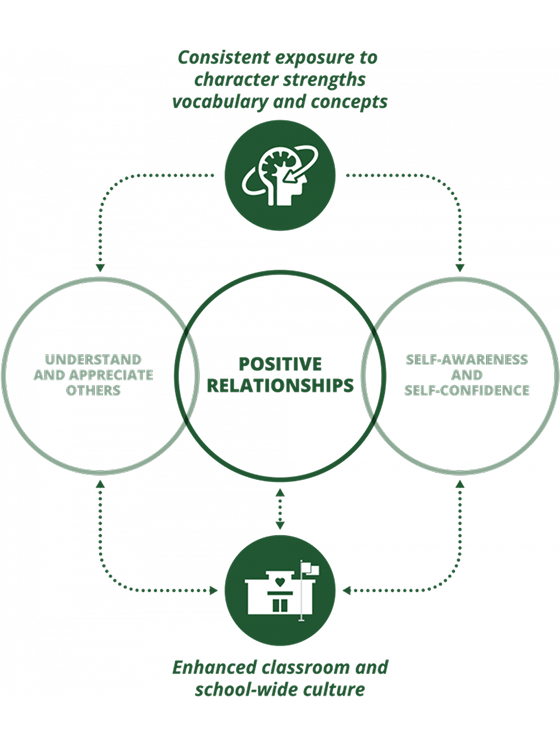
Our model follows a clear progression: consistent exposure to character strengths gives students a shared language for understanding themselves and appreciating others. Those capacities strengthen relationships. When positive relationships become the norm across a school, they enhance school culture. And a more positive school culture creates the conditions for better behavior, attendance, and academic outcomes.
Research on P2 has found high implementation fidelity along with improvements in student behavior, teacher-student relationships, and students' sense of relatedness.
Who P2 is for
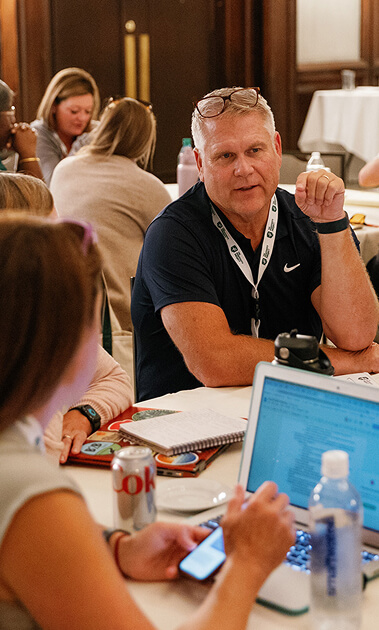
Character development takes more than one classroom or one assembly. It builds when the same words show up during morning meeting, the principal's assembly, the bus ride home, and the dinner table. P2 is designed for everyone in that loop.
Bring P2 to a single school and build a shared character vocabulary across every classroom. Daily 15-minute lessons and ready-to-use, age-appropriate content for Pre-K–12 give teachers a simple framework for morning meetings, advisory periods, and beyond.
Create consistency across every campus with one shared character framework. P2 scales from a handful of schools to large districts, delivering daily 15-minute lessons, Pre-K–12 content, and a Tier 1 foundation that aligns with PBIS, MTSS, and student wellness.
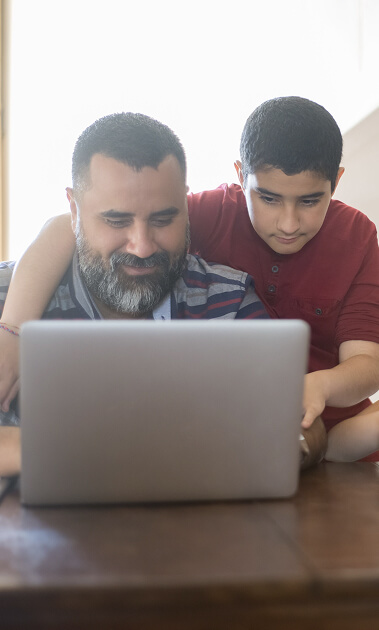
P2 for Families gives parents a window into what their child is learning each week, with simple ways to keep the conversation going at home. Weekly family letters, take-home activities, and character strength certificates go from school to the dinner table.
District partner spotlight
For years, Clovis Unified educators witnessed growing challenges in relationship-building and self-awareness. Teachers wanted something they could teach every day, before problems came up. Principals adopted The Positivity Project (P2) one school at a time, and as more schools saw results, more signed on. Over 40 campuses now teach the same character strength each week. Students hear the same words in the classroom, the cafeteria, and on the playground.
Since adopting P2 districtwide, schools have reported fewer office referrals, students settling conflicts on their own, and parents whose children ask to come to school even when they're sick.
"We're not waiting for a situation to arise to have a teachable moment. We're teaching concepts like integrity before problems happen." – Donelle Kellom, Principal, Clovis Elementary
Students sharing character vocabulary
“The Positivity Project has been an absolute game-changer in terms of helping build a culture not just for students but really for the professionals in the building, to give them an opportunity to work with one another, build relationships, talk to each other, to get to know each other in an authentic way. That's changed my school. It changed the middle school and lifted it into a place where we used P2 not just as a program, but really the lens through which we saw all of the work that we did in our school building.”
“Our discipline and behavior referrals have declined significantly over the past three years. Words Matter and OPM have shifted Oraze's culture toward kindness.”
It is incredible that the reps from P2 meet with the implementers at the school level and not just me, the district rep. We have a district of 44 schools, so the personalized support is appreciated beyond words.
“I find Positivity Project a game-changer primarily because it shifts character education from a vague concept to a concrete, daily habit that can be seen and felt throughout my entire building.”
“The Positivity Project is definitely something that I think every parent would want in their household. At the dinner table, in the morning on the way to school, just to repeat those things, to talk about them so it becomes a part of their life and their decision-making.”
“I can honestly say I have never felt so good about a character education program in my teaching career. I can actually see this program working every day. Each week that we touch on new strengths, we are all reminded of our potential to be better human beings. We have truly seen a transformation in our program since we began using The Positivity Project.”
“One of the most amazing things I've ever seen in my 25 years in education is what The Positivity Project did for our school and our students and our staff and our community. I can't say enough about the impact, the positive impact it has had for our educators and our students.”
“It is as simple as turning on your computer, putting up that slide deck, and having a conversation with students.”
“From day one, new people, they could not make this easier on you. If you want, you can literally read the script that day. It is so beautifully done for you. It's minimal work.”
“If you're looking for a meaningful way to build character, boost achievement, and create a school-wide sense of pride and ownership, I can say confidently: The Positivity Project works.”
“Without P2, our campus would likely be a place where adults settle conflicts, and behavior is handled through discipline alone. What we have instead is a campus where students lead.”
P2 gives us an intentional resource and approach that ties together many district-wide initiatives, such as Safety, Restorative Practices, Core Behavior Supports, and Wellness Screeners. These initiatives are meant to create a positive culture and climate, and P2 gives us a resource to help bring all of that together.
Why it lasts
P2 is designed to become part of how a school operates — not another initiative educators have to manage.
P2 starts with a universal Tier 1 foundation, designed to reach every student across the school — not only students flagged by a referral. When the whole school works on character and relationships together, the shared language becomes part of the building's identity. P2 also includes Tier 2 and Tier 3 resources that build on that same language to support students who need more.
Teachers actually use P2 because it fits into their busy week. Open the slide deck, teach the lesson, close the deck. New teachers can start on day one. In peer-reviewed research, P2 teachers reached 93–94% implementation fidelity, nearly double the industry norm.
P2 is grounded in positive psychology's 24 character strengths from the 800-page book Character Strengths and Virtues, a framework backed by decades of peer-reviewed research. It was defensible 20 years ago and it will be defensible 20 years from now. That stability allows districts to build P2 into long-term plans.
Weekly Family Letters, take-home activities, and student recognition help extend character conversations beyond the school day. When families can see what their children are learning and get involved, character development continues at home, and schools keep using P2 because families are engaged.
Built to fit
Whatever your district has invested in — MTSS, PBIS, RTI, or Portrait of a Graduate — P2 complements and strengthens it. The 24 character strengths and the Other People Mindset are the universal Tier 1 daily practice that makes every framework underneath them work better. Schools and districts adopt P2 as the daily practice that ties all their initiatives together.
Frequently asked questions
The Positivity Project (P2) is a research-based character education curriculum for Pre-K–12 schools that teaches students the 24 character strengths identified through positive psychology. In just 15 minutes a day, P2 helps schools build positive school culture and support academic success through a shared focus on character and relationships. Trusted by more than 800 schools nationwide, P2 equips educators with ready-to-use lessons that require minimal prep time while creating lasting, school-wide impact.
Positive psychology’s 24 character strengths serve as our foundation. Ranging from bravery and perseverance to integrity and gratitude, the character strengths are classified and described in the 800-page book Character Strengths and Virtues, co-authored by Drs. Chris Peterson and Martin Seligman. These strengths aren’t about ignoring the negative. Instead, they help us overcome life’s inevitable adversities. P2’s curriculum teaches one character strength per week, giving students the language and framework to recognize these strengths in themselves and others.
The Other People Mindset is a core philosophy of The Positivity Project. It teaches students to shift from a “Me Mindset” — where they see the world only through their own perspective — to an “Other People Mindset,” where they actively seek to understand, appreciate, and value others. By developing this mindset alongside the 24 character strengths, students build stronger relationships, greater empathy, and a more connected school community.
Most character education programs are built around a set of organizational values or pillars and are taught through periodic lessons or assemblies. The Positivity Project is different in three key ways. First, P2 is grounded in positive psychology's 24 character strengths — rather than a values list created by a single organization. Second, P2 is a daily practice, not a weekly or monthly lesson; 15 minutes a day with minimal teacher prep builds lasting character habits instead of one-off conversations. Third, P2 takes a strengths-based approach — helping students identify their own character strengths and teaching them to recognize and appreciate others' strengths through the Other People Mindset. Rather than focusing on what's wrong with people, P2 helps students understand what's right with people. Combined with built-in family engagement through P2 for Families, a consistent Pre-K–12 vocabulary, and purpose-built MTSS Tier 1 alignment, P2 is designed to become a lasting part of your school culture, not a program that fades after a year.
The Positivity Project provides a comprehensive character education curriculum for Pre-K through 12th grade. Every grade band features age-appropriate, developmentally tailored lessons and activities, ensuring consistent character strength education across a student’s entire academic journey from early childhood through high school.
P2 lessons are designed to take just 15 minutes per day with minimal teacher preparation. Each week focuses on one character strength, with ready-to-use lesson materials that educators can seamlessly integrate into morning meetings, advisory periods, homeroom, or any existing part of the school day. This low time commitment is one of the key reasons P2 sustains long-term adoption where other programs fade.
The Positivity Project is designed as a Tier 1 universal instruction program within the MTSS framework, meaning it reaches every student, every day, to proactively build a foundation of character and positive relationships. P2 also provides Tier 2 and Tier 3 supports for students who need additional intervention. By strengthening the Tier 1 foundation, P2 helps reduce the number of students requiring higher-level behavioral or social-emotional interventions, saving schools time and resources.
Schools implementing P2 have reported measurable improvements in attendance, student behavior, and overall school culture. For example, Clovis Unified School District documented increased student attendance, fewer behavioral incidents, and a stronger sense of community across its schools after district-wide implementation. Educators consistently report that P2 creates a common vocabulary around character that transforms how students interact with each other and with adults.
P2’s curriculum is grounded in the science of positive psychology, specifically the 800-page Character Strengths and Virtues by Drs. Christopher Peterson and Martin Seligman. Beyond this foundational framework, P2 itself has been the subject of multiple peer-reviewed studies. Published research shows that P2 increases student-teacher relationship quality, strengthens students’ sense of relatedness, and significantly reduces both internalizing and externalizing behavior problems compared to control groups. P2 also meets the criteria for a Tier 2 evidence-based intervention under ESSA. Notably, in peer-reviewed research, P2 teachers achieved 93-94% implementation fidelity—nearly double the industry norm. More telling: 90.9% of teachers wanted to continue using P2 the following year.
Yes. P2 for Families provides parents and caregivers with transparency into what students are learning in the classroom each week. P2 curriculum also includes weekly Family Letters to send home, allowing families to reinforce and discuss strengths at home, creating a consistent message between school and family. This transparency builds trust and strengthens the home-school connection.
P2 is a research-based character education program that helps Career & Technical Education (CTE) programs develop the durable skills employers consistently rank as essential for workforce readiness. Built on positive psychology’s 24 character strengths and the Other People Mindset, P2 gives students, teachers, and industry partners a shared vocabulary for the professional behaviors that shape career outcomes. Lessons integrate into CTE instruction across all 16 career clusters, with minimal preparation time required from teachers. For district leaders, P2 directly addresses the employability skills pillar of Perkins V, providing a structured method for developing and documenting the third leg of the CTE framework alongside academic and technical skills. According to the 2025 New Hire Readiness Report from the U.S. Chamber of Commerce and College Board, 84% of hiring managers say most high school graduates are not prepared to enter the workforce — P2 is how districts close that gap with intention.
The Positivity Project (P2) is a research-based character education curriculum for Pre-K–12 schools that teaches students the 24 character strengths identified through positive psychology. In just 15 minutes a day, P2 helps schools build positive school culture and support academic success through a shared focus on character and relationships. Trusted by more than 800 schools nationwide, P2 equips educators with ready-to-use lessons that require minimal prep time while creating lasting, school-wide impact.
Positive psychology’s 24 character strengths serve as our foundation. Ranging from bravery and perseverance to integrity and gratitude, the character strengths are classified and described in the 800-page book Character Strengths and Virtues, co-authored by Drs. Chris Peterson and Martin Seligman. These strengths aren’t about ignoring the negative. Instead, they help us overcome life’s inevitable adversities. P2’s curriculum teaches one character strength per week, giving students the language and framework to recognize these strengths in themselves and others.
The Other People Mindset is a core philosophy of The Positivity Project. It teaches students to shift from a “Me Mindset” — where they see the world only through their own perspective — to an “Other People Mindset,” where they actively seek to understand, appreciate, and value others. By developing this mindset alongside the 24 character strengths, students build stronger relationships, greater empathy, and a more connected school community.
Most character education programs are built around a set of organizational values or pillars and are taught through periodic lessons or assemblies. The Positivity Project is different in three key ways. First, P2 is grounded in positive psychology's 24 character strengths — rather than a values list created by a single organization. Second, P2 is a daily practice, not a weekly or monthly lesson; 15 minutes a day with minimal teacher prep builds lasting character habits instead of one-off conversations. Third, P2 takes a strengths-based approach — helping students identify their own character strengths and teaching them to recognize and appreciate others' strengths through the Other People Mindset. Rather than focusing on what's wrong with people, P2 helps students understand what's right with people. Combined with built-in family engagement through P2 for Families, a consistent Pre-K–12 vocabulary, and purpose-built MTSS Tier 1 alignment, P2 is designed to become a lasting part of your school culture, not a program that fades after a year.
The Positivity Project provides a comprehensive character education curriculum for Pre-K through 12th grade. Every grade band features age-appropriate, developmentally tailored lessons and activities, ensuring consistent character strength education across a student’s entire academic journey from early childhood through high school.
P2 lessons are designed to take just 15 minutes per day with minimal teacher preparation. Each week focuses on one character strength, with ready-to-use lesson materials that educators can seamlessly integrate into morning meetings, advisory periods, homeroom, or any existing part of the school day. This low time commitment is one of the key reasons P2 sustains long-term adoption where other programs fade.
The Positivity Project is designed as a Tier 1 universal instruction program within the MTSS framework, meaning it reaches every student, every day, to proactively build a foundation of character and positive relationships. P2 also provides Tier 2 and Tier 3 supports for students who need additional intervention. By strengthening the Tier 1 foundation, P2 helps reduce the number of students requiring higher-level behavioral or social-emotional interventions, saving schools time and resources.
Schools implementing P2 have reported measurable improvements in attendance, student behavior, and overall school culture. For example, Clovis Unified School District documented increased student attendance, fewer behavioral incidents, and a stronger sense of community across its schools after district-wide implementation. Educators consistently report that P2 creates a common vocabulary around character that transforms how students interact with each other and with adults.
P2’s curriculum is grounded in the science of positive psychology, specifically the 800-page Character Strengths and Virtues by Drs. Christopher Peterson and Martin Seligman. Beyond this foundational framework, P2 itself has been the subject of multiple peer-reviewed studies. Published research shows that P2 increases student-teacher relationship quality, strengthens students’ sense of relatedness, and significantly reduces both internalizing and externalizing behavior problems compared to control groups. P2 also meets the criteria for a Tier 2 evidence-based intervention under ESSA. Notably, in peer-reviewed research, P2 teachers achieved 93-94% implementation fidelity—nearly double the industry norm. More telling: 90.9% of teachers wanted to continue using P2 the following year.
Yes. P2 for Families provides parents and caregivers with transparency into what students are learning in the classroom each week. P2 curriculum also includes weekly Family Letters to send home, allowing families to reinforce and discuss strengths at home, creating a consistent message between school and family. This transparency builds trust and strengthens the home-school connection.
P2 is a research-based character education program that helps Career & Technical Education (CTE) programs develop the durable skills employers consistently rank as essential for workforce readiness. Built on positive psychology’s 24 character strengths and the Other People Mindset, P2 gives students, teachers, and industry partners a shared vocabulary for the professional behaviors that shape career outcomes. Lessons integrate into CTE instruction across all 16 career clusters, with minimal preparation time required from teachers. For district leaders, P2 directly addresses the employability skills pillar of Perkins V, providing a structured method for developing and documenting the third leg of the CTE framework alongside academic and technical skills. According to the 2025 New Hire Readiness Report from the U.S. Chamber of Commerce and College Board, 84% of hiring managers say most high school graduates are not prepared to enter the workforce — P2 is how districts close that gap with intention.
The Positivity Project (P2) is a research-based character education curriculum for Pre-K–12 schools that teaches students the 24 character strengths identified through positive psychology. In just 15 minutes a day, P2 helps schools build positive school culture and support academic success through a shared focus on character and relationships. Trusted by more than 800 schools nationwide, P2 equips educators with ready-to-use lessons that require minimal prep time while creating lasting, school-wide impact.
Positive psychology’s 24 character strengths serve as our foundation. Ranging from bravery and perseverance to integrity and gratitude, the character strengths are classified and described in the 800-page book Character Strengths and Virtues, co-authored by Drs. Chris Peterson and Martin Seligman. These strengths aren’t about ignoring the negative. Instead, they help us overcome life’s inevitable adversities. P2’s curriculum teaches one character strength per week, giving students the language and framework to recognize these strengths in themselves and others.
The Other People Mindset is a core philosophy of The Positivity Project. It teaches students to shift from a “Me Mindset” — where they see the world only through their own perspective — to an “Other People Mindset,” where they actively seek to understand, appreciate, and value others. By developing this mindset alongside the 24 character strengths, students build stronger relationships, greater empathy, and a more connected school community.
Most character education programs are built around a set of organizational values or pillars and are taught through periodic lessons or assemblies. The Positivity Project is different in three key ways. First, P2 is grounded in positive psychology's 24 character strengths — rather than a values list created by a single organization. Second, P2 is a daily practice, not a weekly or monthly lesson; 15 minutes a day with minimal teacher prep builds lasting character habits instead of one-off conversations. Third, P2 takes a strengths-based approach — helping students identify their own character strengths and teaching them to recognize and appreciate others' strengths through the Other People Mindset. Rather than focusing on what's wrong with people, P2 helps students understand what's right with people. Combined with built-in family engagement through P2 for Families, a consistent Pre-K–12 vocabulary, and purpose-built MTSS Tier 1 alignment, P2 is designed to become a lasting part of your school culture, not a program that fades after a year.
The Positivity Project provides a comprehensive character education curriculum for Pre-K through 12th grade. Every grade band features age-appropriate, developmentally tailored lessons and activities, ensuring consistent character strength education across a student’s entire academic journey from early childhood through high school.
P2 lessons are designed to take just 15 minutes per day with minimal teacher preparation. Each week focuses on one character strength, with ready-to-use lesson materials that educators can seamlessly integrate into morning meetings, advisory periods, homeroom, or any existing part of the school day. This low time commitment is one of the key reasons P2 sustains long-term adoption where other programs fade.
The Positivity Project is designed as a Tier 1 universal instruction program within the MTSS framework, meaning it reaches every student, every day, to proactively build a foundation of character and positive relationships. P2 also provides Tier 2 and Tier 3 supports for students who need additional intervention. By strengthening the Tier 1 foundation, P2 helps reduce the number of students requiring higher-level behavioral or social-emotional interventions, saving schools time and resources.
Schools implementing P2 have reported measurable improvements in attendance, student behavior, and overall school culture. For example, Clovis Unified School District documented increased student attendance, fewer behavioral incidents, and a stronger sense of community across its schools after district-wide implementation. Educators consistently report that P2 creates a common vocabulary around character that transforms how students interact with each other and with adults.
P2’s curriculum is grounded in the science of positive psychology, specifically the 800-page Character Strengths and Virtues by Drs. Christopher Peterson and Martin Seligman. Beyond this foundational framework, P2 itself has been the subject of multiple peer-reviewed studies. Published research shows that P2 increases student-teacher relationship quality, strengthens students’ sense of relatedness, and significantly reduces both internalizing and externalizing behavior problems compared to control groups. P2 also meets the criteria for a Tier 2 evidence-based intervention under ESSA. Notably, in peer-reviewed research, P2 teachers achieved 93-94% implementation fidelity—nearly double the industry norm. More telling: 90.9% of teachers wanted to continue using P2 the following year.
Yes. P2 for Families provides parents and caregivers with transparency into what students are learning in the classroom each week. P2 curriculum also includes weekly Family Letters to send home, allowing families to reinforce and discuss strengths at home, creating a consistent message between school and family. This transparency builds trust and strengthens the home-school connection.
P2 is a research-based character education program that helps Career & Technical Education (CTE) programs develop the durable skills employers consistently rank as essential for workforce readiness. Built on positive psychology’s 24 character strengths and the Other People Mindset, P2 gives students, teachers, and industry partners a shared vocabulary for the professional behaviors that shape career outcomes. Lessons integrate into CTE instruction across all 16 career clusters, with minimal preparation time required from teachers. For district leaders, P2 directly addresses the employability skills pillar of Perkins V, providing a structured method for developing and documenting the third leg of the CTE framework alongside academic and technical skills. According to the 2025 New Hire Readiness Report from the U.S. Chamber of Commerce and College Board, 84% of hiring managers say most high school graduates are not prepared to enter the workforce — P2 is how districts close that gap with intention.
Get started
Start a free pilot and get full access to every P2 lesson — Pre-K through 12 — with no contract or commitment. Run it in one classroom or across your whole school. After a few weeks, listen to how students talk about each other. If the P2 daily lessons work, we'll talk about what a full partnership looks like. If they don’t, you've spent nothing.