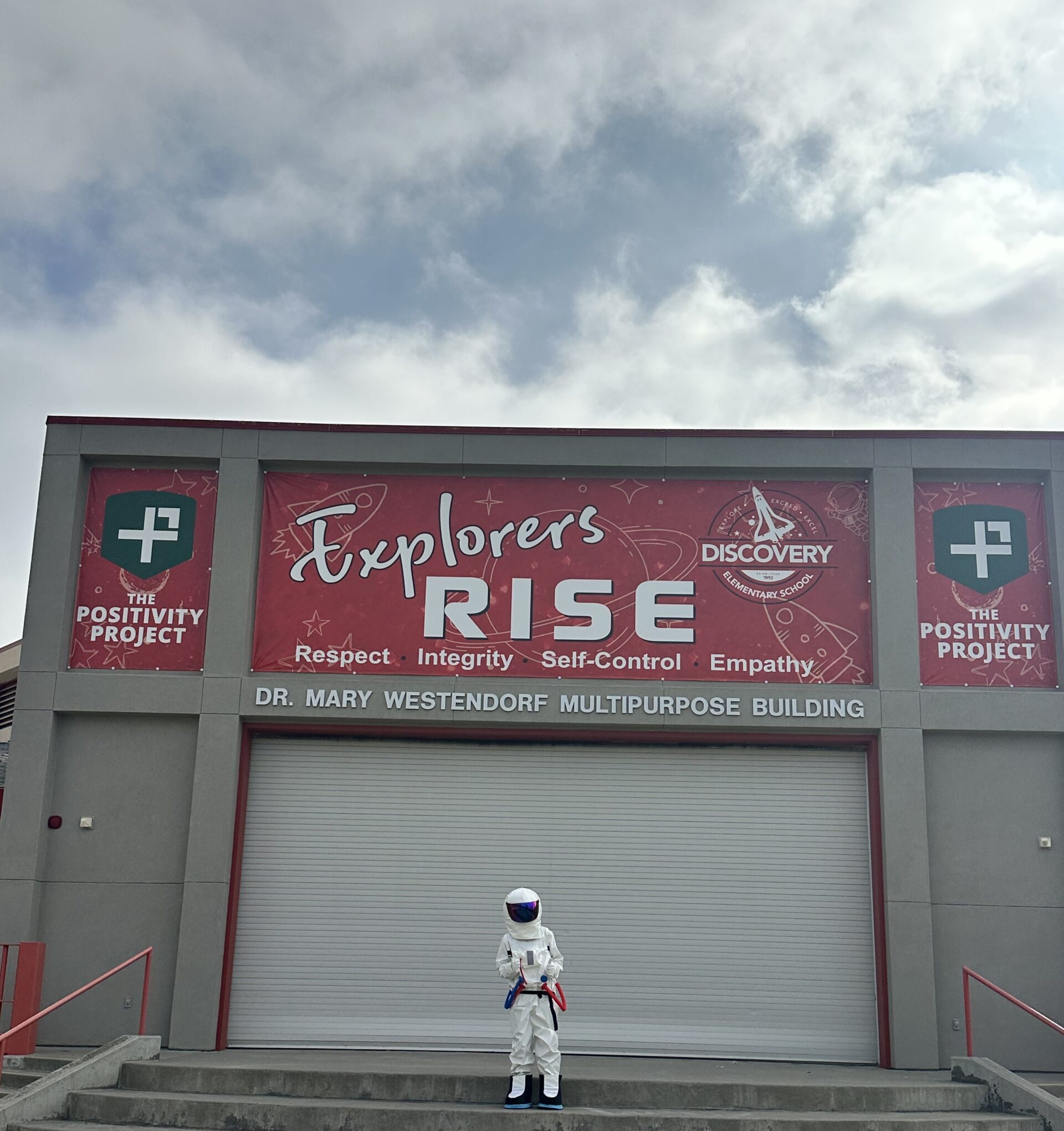
This article was written by Eva Martinez, principal at Discovery Elementary School in the Fruitvale School District (Bakersfield, CA). Discovery is in its 6th year of P2, having launched the program in Fall 2020 as the first school in the district to implement The Positivity Project. Since then, Discovery has seen office discipline referrals drop from 777 in 2022–23 to 408 in 2025–26, suspension rates fall from 0.4% to 0.1%, and chronic absenteeism decline from 17.7% to 5.5% — a 69% reduction over four consecutive years.
How The Positivity Project Transformed Our School Culture: A Principal’s Journey
I began my journey as Principal at Discovery Elementary School during the 2019–2020 school year, after serving for one year as the site’s Vice Principal. During that transition, I observed noticeable shifts in campus culture driven by leadership changes and staff turnover. At the same time, our student demographics were evolving, and it became increasingly clear that additional social-emotional support was needed to meet the needs of all students.
In the fall of 2019, I shared with district leadership my desire to identify a schoolwide approach that would support students socially and emotionally without adding to teachers’ already full plates. Around that time, I was introduced to The Positivity Project (P2) through a colleague who had encountered it at a conference. This connection led me to an administrator at Boris Elementary School in Clovis, and in December 2019, I organized a site visit for our administrative and leadership teams to observe P2 in action.
During this visit, we immediately recognized the potential impact of The Positivity Project.
What stood out most was that it was not perceived as “one more thing,” but rather as an integrated, meaningful approach that could enhance existing practices. The program’s accessibility for teachers, along with its ability to connect students, staff, families, and the broader community, aligned closely with our vision for school culture.
Upon returning to Discovery, enthusiasm quickly spread among staff. Teachers expressed interest in observing the program firsthand, and I facilitated an additional visit for a second group. We then sent our leadership team to Positivity Project training at Fresno State, where they deepened their understanding of the program’s foundation and purpose. It became clear that this was the right fit for our school, and we committed to launching P2 in the fall of 2020.
When the COVID-19 pandemic disrupted traditional schooling in the spring of 2020, we intentionally decided to move forward with implementation. I provided training for all staff via Zoom during the spring and summer, and we officially began our Positivity Project journey in the fall of 2020 in a virtual setting.
Fortunately, we experienced minimal resistance to implementation. This was largely due to the intentional involvement of teachers in the exploration process, including site visits and training opportunities. I also communicated clearly that P2 would be a schoolwide priority, embedding it into our daily schedule. By establishing it as a non-negotiable focus, we created consistency and reinforced its importance within our core work.

From One School to an Entire District
Discovery Elementary was the first school in the Fruitvale School District to implement The Positivity Project, and in the following year, the initiative expanded districtwide. This alignment has strengthened the impact of P2, as a shared language and common practices now extend beyond our campus.
Today, implementation is evident across multiple layers of our system — bus drivers display weekly character strength signage, families engage in conversations at home, and staff consistently integrate P2 language into daily interactions.
At the site level, The Positivity Project has become embedded in our school culture. We have developed student leadership opportunities through a P2 Club and peer mentoring programs that support younger students. Our staff incorporates P2 into self-care days and targeted supports, while our counselor, PE teacher, RBT, and school psychologist utilize P2 resources within Tier 2 and Tier 3 interventions. We have also made intentional efforts to strengthen the connection between school and home, providing families with opportunities to engage with character strengths alongside their children.
The Results
Over time, these efforts have contributed to measurable improvements in student outcomes.
Office discipline referrals (ODRs) have steadily declined, from 777 in 2022-23 to 408 this year. Suspension rates have also decreased from 0.4% in the 2022–2023 school year to 0.1% currently. Additionally, chronic absenteeism has significantly improved, dropping from 17.7% in 2022–2023 to 5.5% in 2025-26.
Among the most striking trends is the steady, year-over-year decline in chronic absenteeism:

Four consecutive years of improvement — a 69% reduction — reflecting a campus where students want to be present and families feel connected to what’s happening inside the building.
Office discipline referrals tell a similar story of long-term progress:

The measurable improvements in our behavioral and attendance data are a direct reflection of our school-wide commitment to The Positivity Project. By embedding character strengths into the daily fabric of Discovery Elementary, our staff and students have cultivated a culture that defines what it means to be an Explorer.
In addition, these gains have been strengthened by the increased effectiveness of our MTSS-B team and staff, who have refined their ability to align Tier 1, 2, and 3 supports, ensuring that every student receives the targeted intervention they need to succeed.

Beyond the Numbers
While these data points are meaningful, the impact of The Positivity Project extends beyond numbers. The shift is felt in the day-to-day experiences of our students, staff, and families. There is a shared sense of connection, belonging, and purpose that has become a defining characteristic of our campus culture. I have had the opportunity to share this work across our county and host a Positivity Project showcase, as we truly believe in its lasting impact.
As we continue this journey, we remain committed to fostering an environment where students are supported not only academically, but also socially and emotionally, ensuring they are equipped to thrive both in school and beyond.

Eva Martinez
Eva Martinez is the Principal of Discovery Elementary School in the Fruitvale School District in Bakersfield, California. Discovery was the first school in the district to implement The Positivity Project in Fall 2020, and the program has since expanded districtwide.