This article was written by Holly Clinard, the first credentialed elementary art teacher in Clovis Unified School District. Holly teaches TK–6 art at Harold L. Woods Elementary in California and earned her Single Subject Teaching Credential in Art from the Academy of Art University, where she is currently completing her Master of Arts in Teaching. Through standards-based art instruction, she helps students develop creativity, confidence, and an appreciation for others.
As an art teacher, I have seen firsthand how a few words can change how a child feels about making art. A thoughtful compliment can give them the confidence to keep going. An unkind comment from a peer, on the other hand, can make them hesitate to share their next idea.
With World Kindness Day approaching, I’ve been thinking about the small opportunities we as teachers have to help students understand that their words matter. In our first-grade art unit on Laurel Burch, colorful cats and patterns gave us a meaningful place to start.
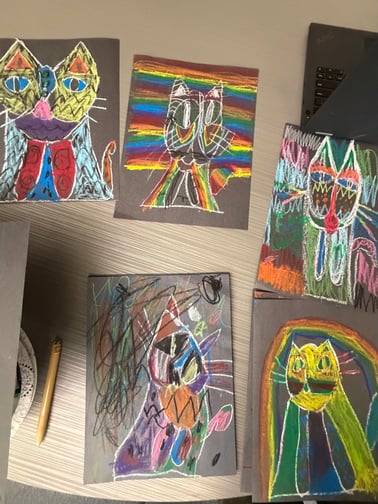
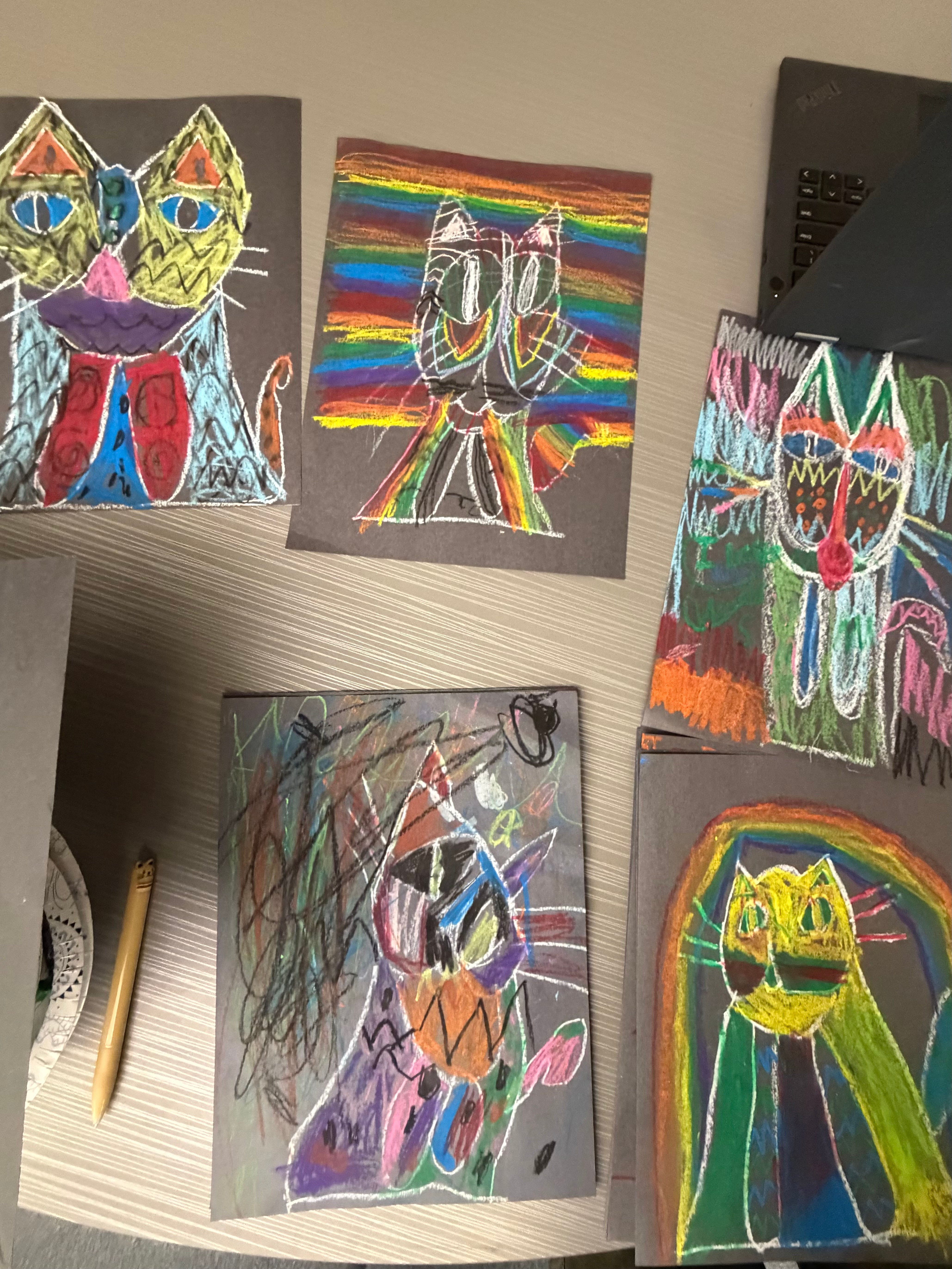
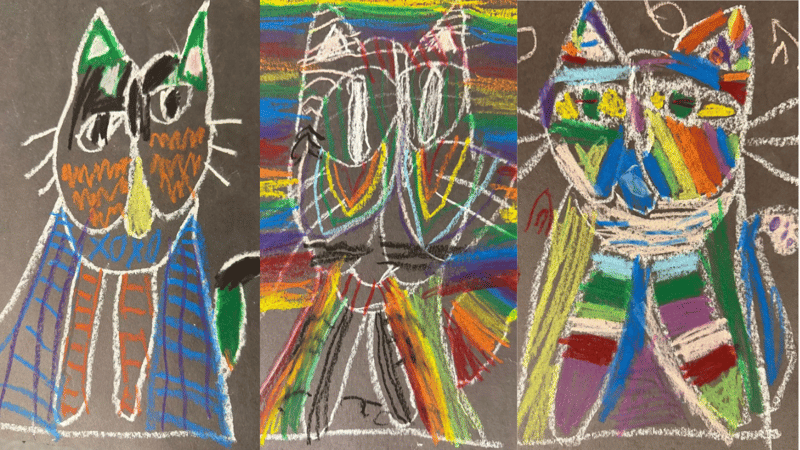
Students studied Burch’s artwork and created their own cats using oil pastels on black paper. Our art focus was pattern: noticing repeating lines and shapes, exploring different combinations, and making choices about how to decorate their cats! Students this age love animals, so it was a perfect fit for these young artists!
Alongside those artistic choices, I encouraged students to consider another kind of choice: how they treated the artists around them.
Connecting Art and Character Education
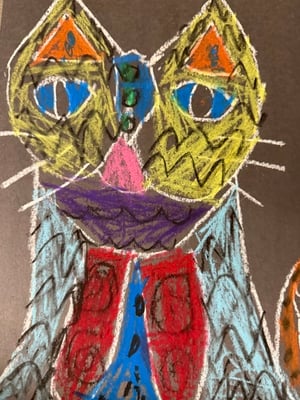 Our Positivity Project focus, “My Words and Actions Affect Others,” fit naturally into the lesson. Making art involves trying something new at times, making decisions, and letting other people see what you’ve created. That can feel exciting, but it can also feel very vulnerable—even in first grade.
I wanted students to think about how their responses could help a classmate feel comfortable creating. Their cats could have different colors, different patterns, and different personalities. Respecting those differences was part of our creative work together.
Teaching Kindness Through Words and Actions
For younger students, it helps to make encouragement specific. A comment like “I like how you repeated those shapes” shows someone that you noticed their choices. Asking “Can you tell me about your cat?” gives students room to explain their own ideas. These are simple ways we can help children practice being thoughtful classmates when they look at each other’s work.
Of course, actions matter, too. Sharing art materials, giving classmates plenty of space to work, and handling another person’s artwork carefully all communicate respect. These are important reminders for students of all ages!
Building Confidence and Kindness Beyond the Art Classroom
This is one of the reasons I value connecting art with The Positivity Project. Art gives students an immediate, hands-on opportunity to practice what we’re discussing. As students create alongside one another, they have real choices to make about patience, encouragement, and respect.
World Kindness Day in November is a perfect reminder to notice those choices. My hope is that students carry them into the next art lesson, the classroom, and even the playground.
I want students in my art classes to feel proud of what they create. I also want them to understand that they can help someone else feel brave enough to create, too.

Holly Clinard
I’m Holly Clinard, known to my students as “Mrs. Cloud,” and I’m the first credentialed elementary art teacher in Clovis Unified School District, teaching TK–6 at Woods Elementary. I earned my Single Subject Teaching Credential in Art from the Academy of Art University, where I’m completing my Master of Arts in Teaching. I’m passionate about helping elementary students explore their ideas, think creatively, and build confidence through standards-based art lessons.