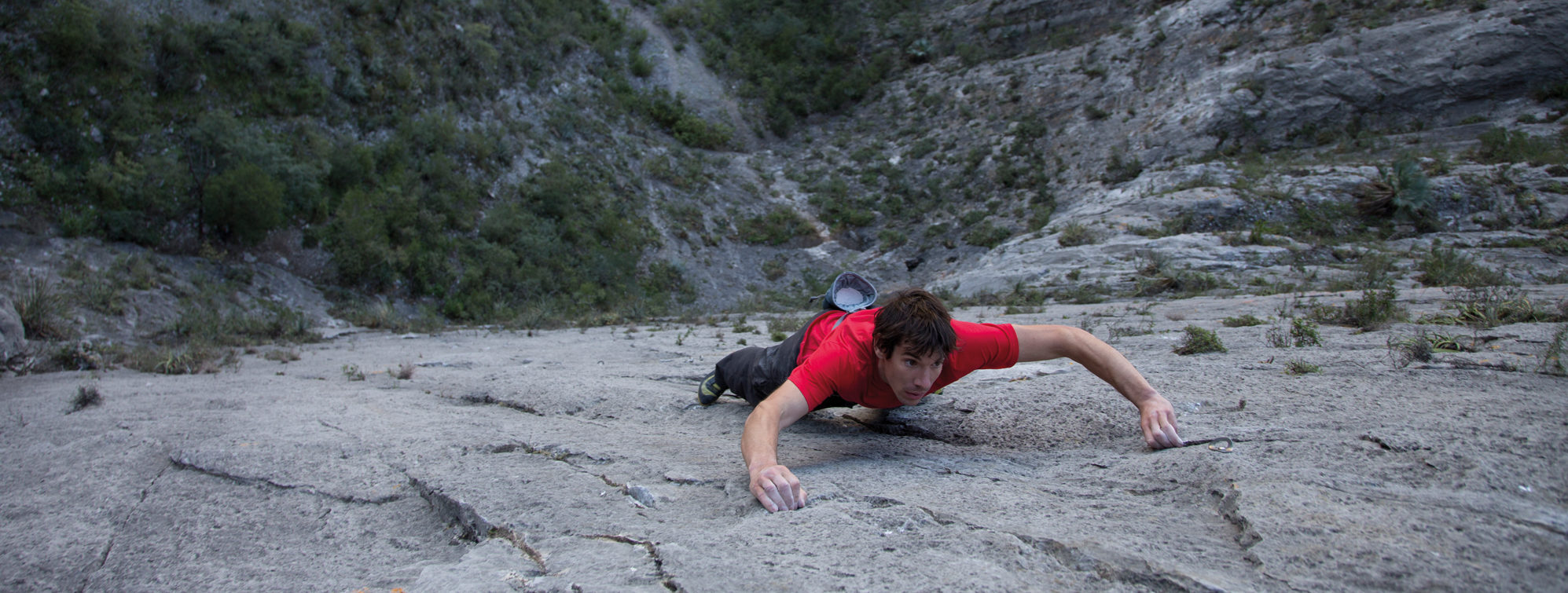
The crux culminated in a karate kick with my left foot over to the inside of an adjacent corner, a maneuver that required a high degree of precision and flexibility, enough so that I’d been doing a nightly stretching routine for a full year ahead of time to make sure that I could comfortably make the reach with my leg.
-Alex Honnold
For an overview of each weekly slide presentation, please skip below to your specific grade level.
-
To see the 1-page Prudence Character Card and share it with your students’ families, click here.
-
For the P2 Reflection Journals, used by all elementary students at the end of the week, click here.
Photo Credit: Theadore Hesser
Prudence means that you plan for the future and achieve your goals by making careful everyday choices. Prudence is the ability to do the right thing, at the right time, for the right reason. It’s a future-oriented way of thinking that helps a person set goals, make plans, and have the discipline to accomplish them. It is cognitive – more a strength of the head than of the heart.
Prudence is not simply being excessively cautious or self-restrained. And, while it is often exemplified through individual financial savings, prudence applies to all parts of life. Philosophers have discussed the strength for millennia. Aristotle wrote about phronesis or “practical wisdom” which allows us to properly use other character strengths. And, According to Dr. Chris Peterson, the Christian theologian Thomas Aquinas “named prudence as the principle wisdom, with bravery subordinate to it. It is prudence that provides the wisdom to assess danger; bravery then allows reason to prevail despite fear.”
This week’s example is Alex Honnold. At first glance, it probably doesn’t appear that a free solo climber (no ropes, harnesses, or protective gear) would exemplify prudence. However, upon deeper examination, it becomes more apparent. His decision to free solo El Capitan, 3,000 feet of vertical granite, came after years of preparation — physically, mentally, and emotionally.
He explains this preparation in his Ted Talk and this interview where he states, “I try to prepare to the point where I’m not feeling afraid because if I was going to feel a lot of fear I wouldn’t go up there. In some ways fear indicates either a lack of preparation or that something has gone wrong. Even something unexpected happening that you haven’t foreseen is a lack of preparation to some extent.”
Elizabeth Chai Vasarhelyi and Jimmy Chin, the directors of the documentary Free Solo (who also exemplify prudence), echo this in the below video when Vasarhelyi states, “If he was a daredevil or a maverick, we wouldn’t have been interested in making the film. It was actually his process and his discipline.”
So, why does prudence matter?
Prudence supports effective individual self-management. Whether aspiring for an athletic record, academic grade, or purchasing a car, foresight and planning are necessary. However, long-term goals – even with a plan – can only be obtained by overcoming those impulses and desires that steer you away from your goals. Prudence provides the wisdom to know which character strength to leverage, at which time, to achieve your desired end state.
On a group level, prudence is crucial – especially today, as shortsightedness has crept into many parts of life. Prudent individuals will produce a prudent society. And, as always, we need leaders who can think long-term and create the world we want our descendants to inherit. This is why the Roman senator and historian Tacitus said, “Forethought and prudence are the proper qualities of a leader.”

And, as a reminder, you can find all of our weekly slide presentations on our website’s Resources page here. This page is the place that we recommend you go to access all of the resources — not via Google Drive folders.
To find your grade level’s presentation, you can simply type the word “prudence” into the Resource Title search bar or sort by Character Strength and select prudence. Each of those options will provide you with 10 slide presentations and one 1-page character card. For a simple overview of the Resources page, with pictures and videos, click here.

Jeff Bryan
Jeff Bryan is the CEO and Co-Founder of The Positivity Project. In this role, he leads the organization to support educators to empower their students to build positive relationships and become their best selves.