My story is the story of thousands of children from around the world. I hope it inspires others to stand up for their rights.
-Malala Yousafzai
For an in-depth overview of each weekly slide presentation, please skip below to your specific grade level.
-
To see the 1-page Fairness Character Card and share it with your students’ families, click here.
-
For the P2 Reflection Journals, used by all elementary students at the end of the week, click here.
Starting Monday, Partner Schools nationwide will begin learning about the character strength of fairness. Fairness combines both the head and the heart. It is the product of moral judgment – the process by which people determine what is morally right and what is morally wrong. Moral reasoning has been explored and analyzed in two main traditions: the justice reasoning approach and the care reasoning approach.
Justice reasoning emphasizes the use of reason and logic. In justice reasoning, fairness is determined by objectively weighing what is right or wrong, as determined by a group, society, or universal ethical principles. Care reasoning, by contrast, emphasizes care and compassion. This approach uses concepts like empathy – and understanding and accounting for the needs, interests, and well-being of another person – when making moral decisions.
Although the two approaches are different, most people use a blend of justice and care reasoning — a combination of their head and their heart — when making choices related to fairness.
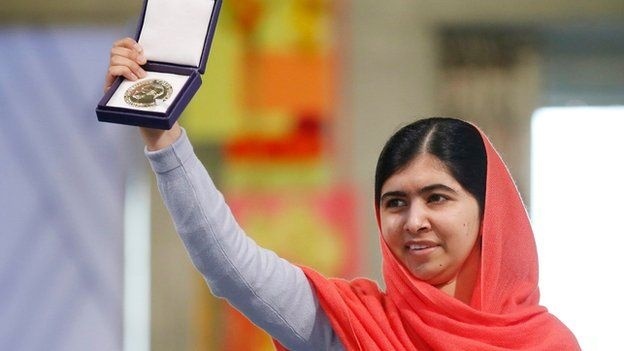
Malala Yousafzai, the youngest Nobel Prize laureate, serves as this week’s character strength example. A native of Pakistan’s Swat Valley, she bravely stood up against the Taliban — and survived their vicious attack — for girls’ right to education. Her fight for children’s education worldwide exemplifies her fairness. As she told the audience in her Nobel Lecture, “It is not time to tell the world leaders to realize how important education is – they already know it – their own children are in good schools. Now it is time to call them to take action for the rest of the world’s children.”
So, why does fairness matter? For individuals, cultivating the character strength of fairness is correlated with highly desirable developmental outcomes. It helps people to become trustworthy friends, responsible citizens, and generally moral people.
Fairness is also essential for the good of the group. As individuals develop the capacity for moral reason they often find a strengthening of: the aptitude for self-reflection; self-awareness and self-confidence; and perspective taking (i.e. the ability to “put themselves in another’s shoes”). When taken together, these skills significantly enhance a person’s ability to solve interpersonal and group relationship problems.
And, as a reminder, you can find all of our weekly slide presentations on our website’s Resources page. Enjoy the slides — and please be sure to let us know how it’s going by posting to Twitter and using the #PositivityInAction hashtag!

Jeff Bryan
Jeff Bryan is the CEO and Co-Founder of The Positivity Project. In this role, he leads the organization to support educators to empower their students to build positive relationships and become their best selves.