This post was written by Olivia Holmberg, a 2nd-grade teacher at W.M. Irvin Elementary in Concord, NC. For the past four years, W.M. Irvin has built the Positivity Project into the daily fabric of its school community, using character strengths as a shared foundation across classrooms, grade levels, and specials.
P2 has become an important and meaningful part of our classroom and school community, as a foundation that supports everything else we do. When we first introduced the Positivity Project, we wanted something that would help shape our classroom culture, strengthen relationships, and give students the tools they need to understand themselves and others. Over time, P2 has done exactly that, helping create a more connected, respectful, and supportive learning environment.
Why We Chose the Positivity Project
We chose P2 because we were seeing a growing need for intentional social-emotional learning. Our students come to school with a wide range of experiences, emotions, and needs. Some arrive confident in who they are, while others are still learning how to manage big feelings, navigate friendships, and believe in themselves. P2 focuses on character strengths students already possess and teaches them how those strengths impact their relationships and their community.
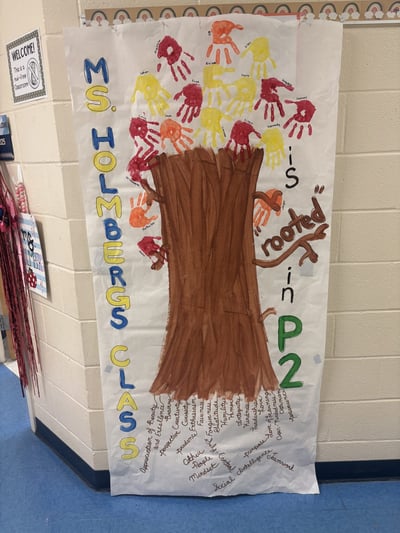
A Shared Language That Grows With Students
Another reason P2 works well for our school is consistency. The same character strengths and shared language are used across grade levels, which allows students to grow with the program year after year. Because of this, students do not see character education as a one-time lesson; rather, it becomes part of who they are and how they interact with others.
How P2 Fits Into Our Routine
In our classroom, P2 is woven into the day in a natural and intentional way. Each week, we introduce the new character strength during morning meeting or our social-emotional learning time. We use short videos, discussions, or real-life scenarios to help students understand what the strength looks like and why it matters. From there, the strength becomes part of our daily conversations. We notice it in read-alouds, connect it to characters in stories, and reference it during writing, group work, and problem-solving activities.
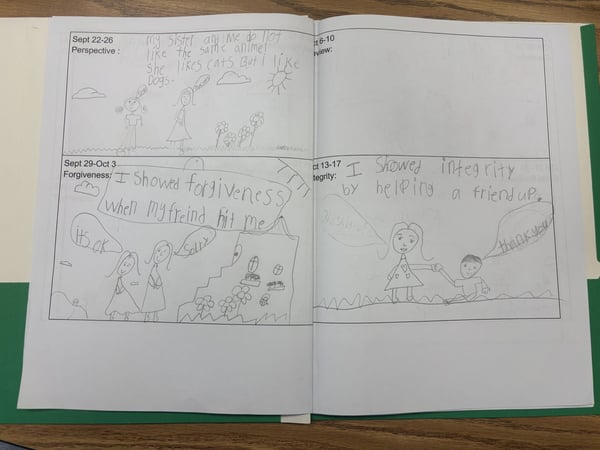
To reflect on our learning of the character strength that week, students add an entry to their P2 journal on Fridays. In 2nd grade, students write 2-3 sentences about how they can/have already applied the character strength to their personal lives, and draw a picture to go with it. Their weekly journal entries help students to reflect and review all of the strengths throughout the P2 curriculum.
Character Strengths Across the Whole Building
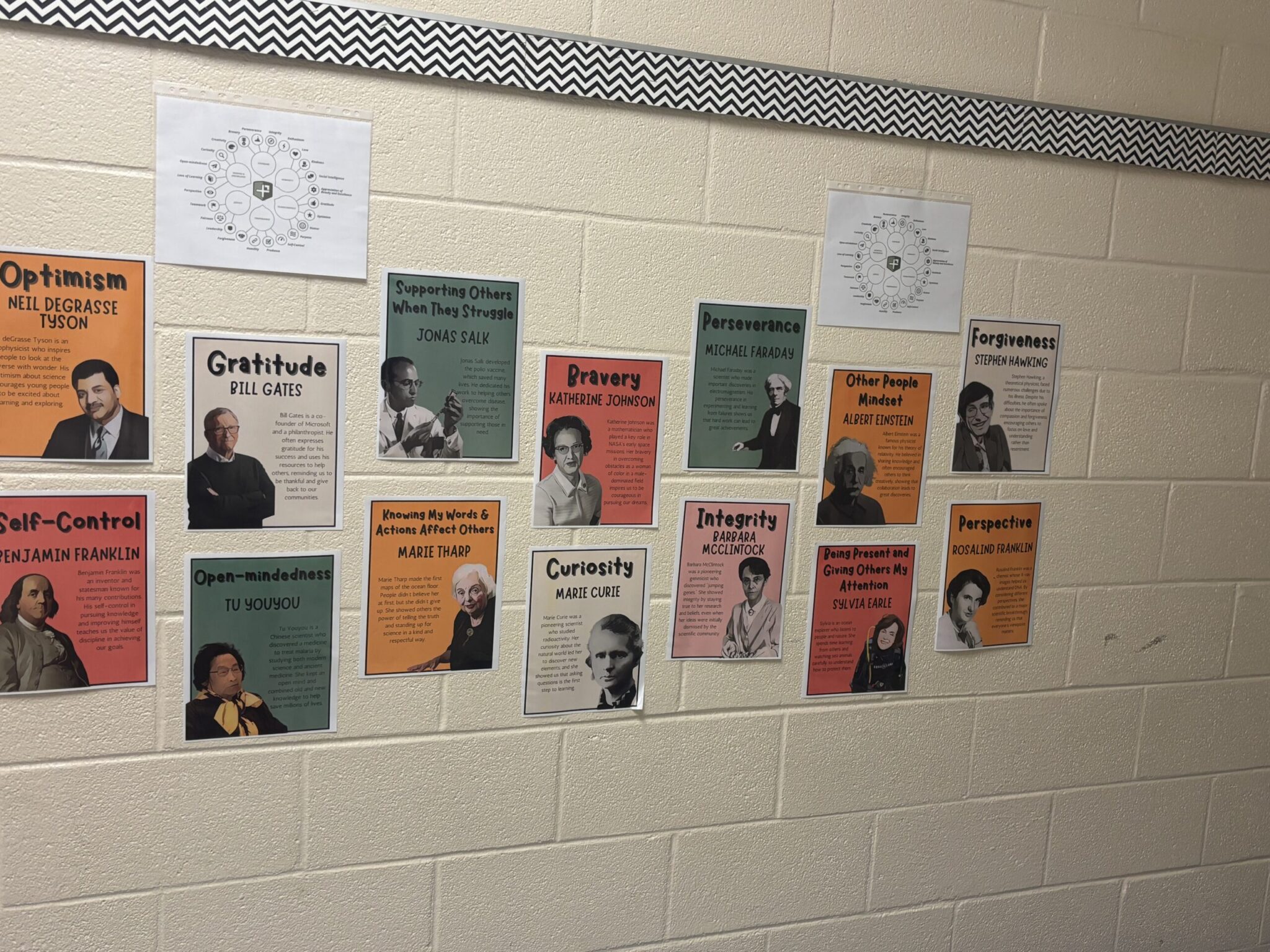
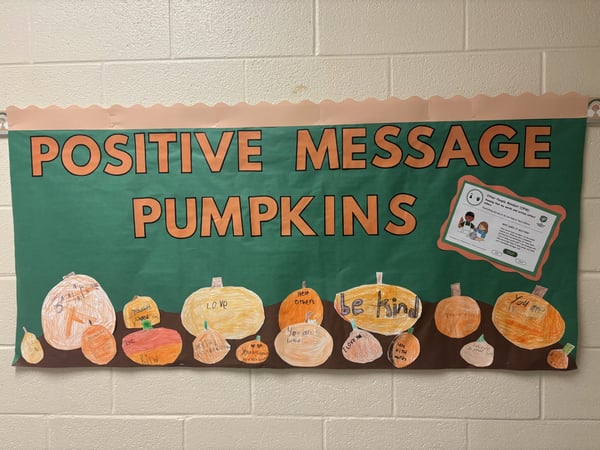
An important part of making P2 meaningful across our school is the way our encore team, administrators, and staff help make the character strengths relevant to students. Throughout the building, the encore team has created displays that show how musicians, artists, scientists, and characters from books demonstrate P2 strengths in real and recognizable ways. Students see perseverance in musicians as they practice, creativity and curiosity in artists and scientists, and strengths like bravery, kindness, and leadership reflected in characters they read about. In addition, teachers intentionally connect themselves to P2 by sharing the strengths they identify with and model each day. These displays help students see that character strengths are not limited to the classroom, rather they are used by everyone, everywhere, and across all areas of learning.
A Strengths-Based Approach to Classroom Management
P2 has also influenced how we approach behavior and classroom management. Instead of focusing only on rules or mistakes, we focus on strengths. When students demonstrate qualities like kindness, perseverance, self control, or teamwork, we name it and celebrate it. This shifts the focus from what students are doing wrong to what they are doing right, helping them feel seen and valued for their character, not just their academic performance.
What’s Changed in How Students Treat Each Other
The impact on our classroom dynamic has been noticeable. Students are more respectful toward one another and more aware of how their choices affect others. They are learning how to give meaningful compliments and feedback using P2 language, and they are better able to talk through conflicts in a calm and thoughtful way. When disagreements happen, students are more willing to listen, reflect, and problem solve together.
One moment that stands out involved a student who previously struggled with peer interactions. During a class discussion, another student pointed out that this child had shown bravery by speaking up to share their ideas with the whole class. You could see the pride and confidence grow as their character strength was recognized.
Moments like this remind me that P2 helps students see one another in a more positive and compassionate way.
Why P2 Matters for the Long Run
P2 matters to us because it helps students become better learners and better people. Academics are important, but students need strong character and positive relationships to truly succeed. Without P2, our school culture would feel less connected and more reactive. P2 gives us a shared language, a common goal, and a way to intentionally build a positive school community.
By embedding character education into our daily routines, we are helping students grow not only academically, but socially and emotionally as well. P2 has helped us meet the needs of our students by teaching them empathy, self-awareness, and respect, which are skills they will carry with them far beyond the classroom.

Olivia Holmberg
I am a 2nd grade teacher at WM Irvin Elementary, located in Concord, NC. I studied Elementary Education at the University of North Carolina at Charlotte. I am currently in my first year teaching. Outside of teaching, I enjoy traveling, going to concerts, and spending time with my friends and family.