


Building Belonging Through Restorative Circles
By Caitlin SirseThis article was written by Caitlin Sirse and sparked by an interview with Jessica Shoe, a 7th grade ELA teacher at Mount Pleasant Middle School in Cabarrus County, North Carolina. Caitlin is the Media Specialist at Mount Pleasant Middle School, where she works alongside students, teachers, and staff across the entire building and has seen firsthand how the language of The Positivity Project and restorative circles strengthens classroom culture. Drawing on Ms. Shoe’s daily classroom experience and her own school-wide vantage point, Caitlin offers a grounded look at what P2 looks like when it becomes part of how a school actually runs.
How P2 Comes to Life at MPMS
In today’s classrooms, academic success cannot exist in isolation from relationships, character, and emotional well-being. Students arrive each day carrying more than backpacks and notebooks — they also bring their experiences, worries, strengths, and hopes with them. As the media specialist, I am very lucky to interact with students, teachers, and staff in the whole school. I have seen how using the language from The Positivity Project and restorative circles can strengthen a classroom culture. This allows students to not only feel comfortable learning academically, but also feel safe, valued, and emotionally supported. I feel this is one of the most impactful ways we can foster a deeper sense of community and belonging at school.
Today, we will share details about one 7th grade teacher’s experience with P2 and restorative circles.
Weaving P2 Into the School Day
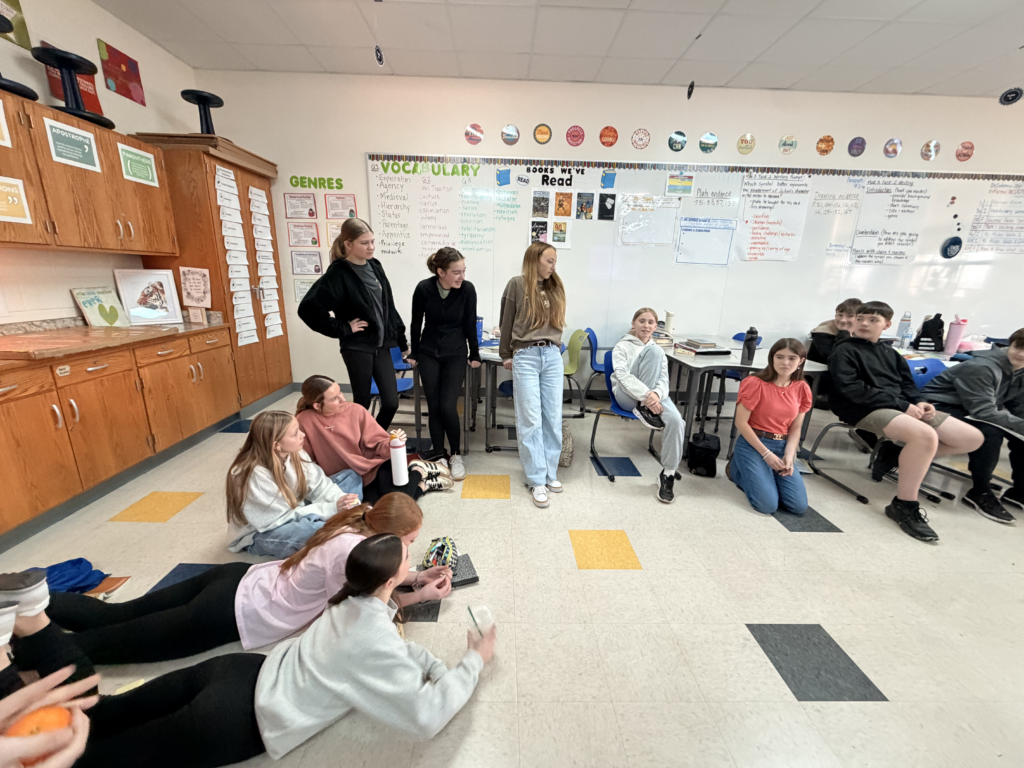
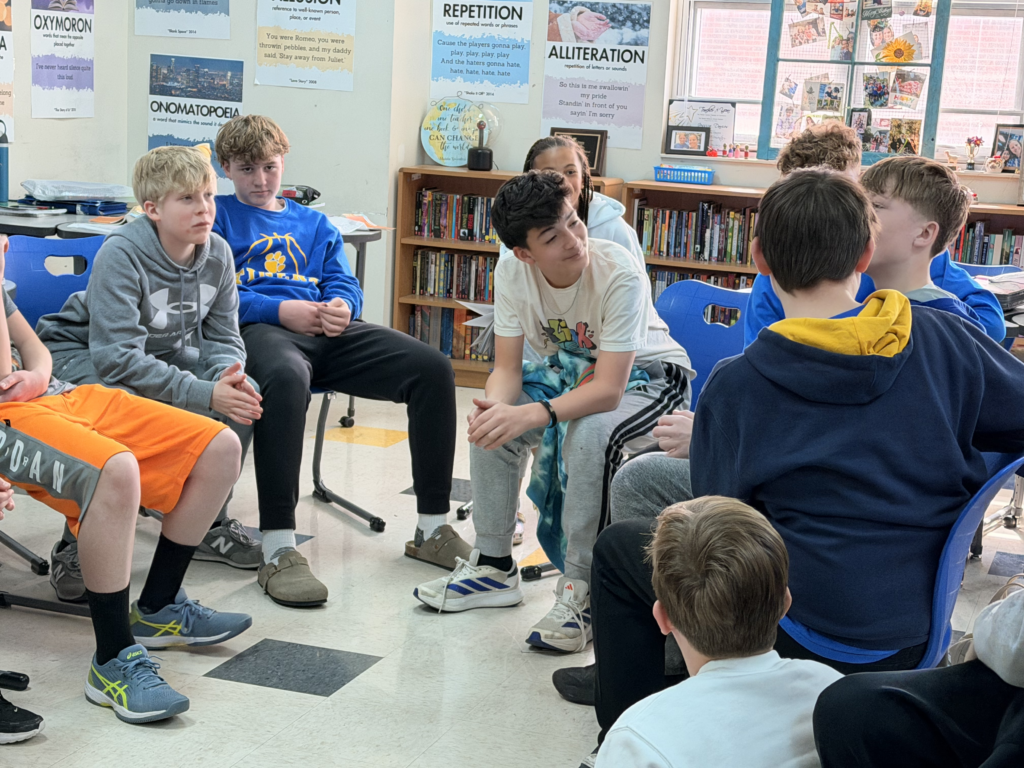
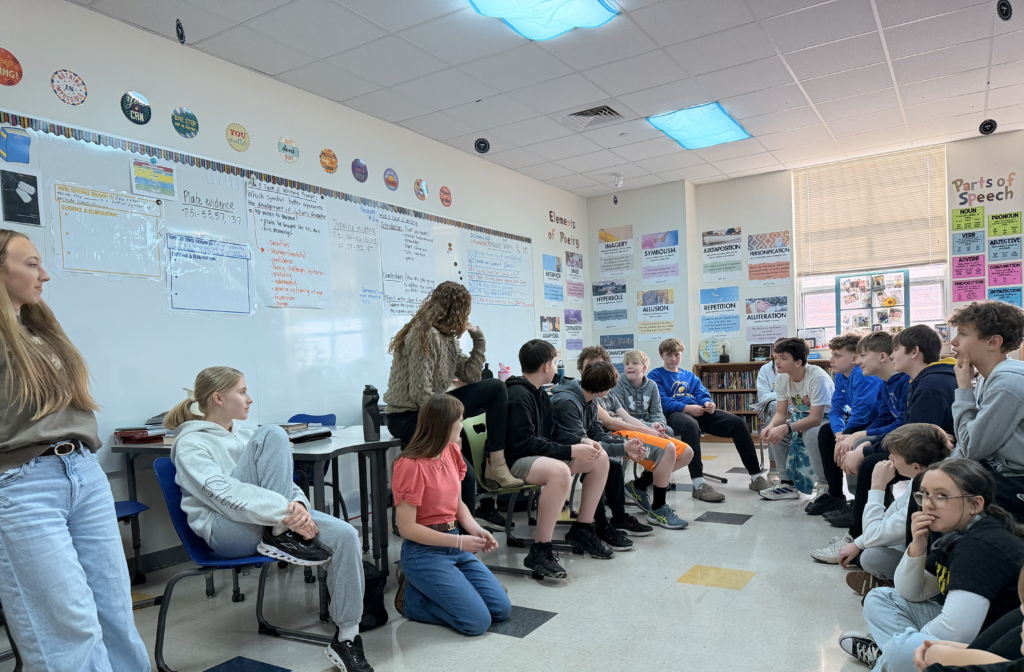
Jessica Shoe, 7th grade ELA teacher, implements P2 daily in both her classes and homeroom, most intentionally through restorative circles. These circles are not reserved for moments of conflict or crisis. Instead, they are a consistent, proactive practice woven into our routines. Students sit in a circle and follow established norms centered on respect, empathy, and active listening. This structure alone sends a powerful message: every voice matters.
Sometimes circles are used at the beginning of class as a check-in, allowing students to reflect on how they are feeling or what they need to be successful that day. Other times, they are used during instruction for comprehension checks, reflection on academic content, or discussion of P2 questions tied to character strengths. Circles are flexible and responsive, which allows them to meet students where they are whether that is academically, socially, and emotionally.
By embedding restorative circles into our day, P2 becomes part of the classroom culture rather than an add-on.
Character strengths are not confined to a single lesson; they show up in how students listen to one another, respond to disagreement, and support their peers.
P2 and Restorative Circles: A Natural Connection
Restorative circles align seamlessly with The Positivity Project’s emphasis on relationships and character strengths. During these discussions, students actively practice social intelligence, perspective, empathy, integrity, and open-mindedness. They learn not only to share their own thoughts, but also to consider how others may feel or try to see a situation through a different lens.
One of the most powerful aspects of circles is how they help students recognize character strengths in action — not just in themselves, but in others. Students begin to see that strengths are not abstract traits listed on a poster, but real behaviors that shape how a community functions. Over time, this awareness builds respect and appreciation among classmates.
Impact on Students and Classroom Culture
Since implementing restorative circles alongside P2, Ms. Shoe has seen noticeable changes in student behavior and engagement. Students are becoming stronger listeners. They are more thoughtful in how they respond to one another and more willing to consider perspectives different from their own. These skills don’t develop overnight, but the growth is steady and meaningful.
One of the most surprising outcomes has been the level of participation from students who typically struggle behaviorally or hesitate to speak in class.
When given a safe, structured space, students who might otherwise disengage are often the ones who share the most insight. Seeing these students feel valued and heard is one of the most rewarding aspects.
Restorative circles have also helped students develop emotional awareness. They are learning how to articulate their feelings, reflect on choices, and work through challenges constructively. These moments of reflection often carry over into academic work, where students become more willing to take risks and persevere through difficulty.
Lessons Learned as an Educator
Using restorative circles has changed how Ms. Shoe sees her students and she believes how they see one another. Ms. Shoe has learned when students feel respected and genuinely listened to, they are far more likely to engage both socially and academically. Circles have allowed her to understand students as individuals, not just as learners measured by grades or test scores.
Another key lesson has been the power of structure. While circles are rooted in open dialogue, the norms of respect and empathy create a sense of safety that encourages honest conversation. Students rise to the expectations set for them, especially when those expectations are grounded in trust and consistency.
Why P2 Matters
P2 matters because it prioritizes what students need most: positive relationships, a sense of belonging, and an understanding of their own character strengths. In middle school, students are navigating rapid emotional and social changes and P2 gives them the tools and language to discuss and make sense of those experiences.
Without P2, school culture would feel different. Conversations about character and relationships might happen sporadically, but they wouldn’t be intentional and the language may not be the same across the school. P2 creates a common framework that unites students, staff, and families around the idea that character is just as important as achievement.
Making P2 Our Own
While The Positivity Project provides a strong foundation, restorative circles also allow teachers like Ms. Shoe to adapt P2 in ways that resonate with specific students. By connecting character strengths to real experiences, students see the relevance of what they are learning. This may appear in class discussions, peer interactions, and everyday challenges. This personalization helps P2 feel authentic rather than scripted.
Long-Term Impact
Ultimately, restorative circles and P2 work together to shape a classroom community built on trust, empathy, and respect. These practices take time, and require patience and consistency. However, the payoff is undeniable. Students are more engaged, more connected, and more aware of their impact on others.
We hope students continue to listen with empathy, communicate respectfully, and recognize the strength of community after they leave middle school. P2 reminds us that success is not only measured by academic growth, but by the kind of people our students one day become.
In the end, restorative circles reinforce one of the most important lessons P2 teaches: character and relationships are not extras—they are essential.