

Building Character, Community, and Connection at Hill View Elementary
By Alex NortonThis article was written by Hill View Elementary School Counselor, Alex Norton. Hill View Elementary is located in Sylvania, Ohio and is in its fifth year of implementing The Positivity Project. With 11 years of experience serving students at Hill View as part of Sylvania Schools, Alex has supported the school’s commitment to fostering students’ character growth and well-being.
At Hill View Elementary, academic growth and social-emotional learning go hand in hand. We believe that teaching students how to be kind, resilient, and reflective is just as important as teaching them what to learn. That belief is why The Positivity Project (P2) has become such an integral part of our day, our shared language, and our overall school culture.
Hill View spans kindergarten through fifth grade, and P2 gives all of our students, regardless of age or ability, the tools they need to understand themselves, build positive relationships, and navigate challenges with both confidence and compassion. It seamlessly fits into our Positive Behavior Intervention and Supports (PBIS) system as we teach students to be Respectful, Responsible, and Ready to Learn. Over time, it has transformed not only individual classrooms, but also the way our entire school community interacts with and supports one another.
How We Implement P2 in Our Classrooms
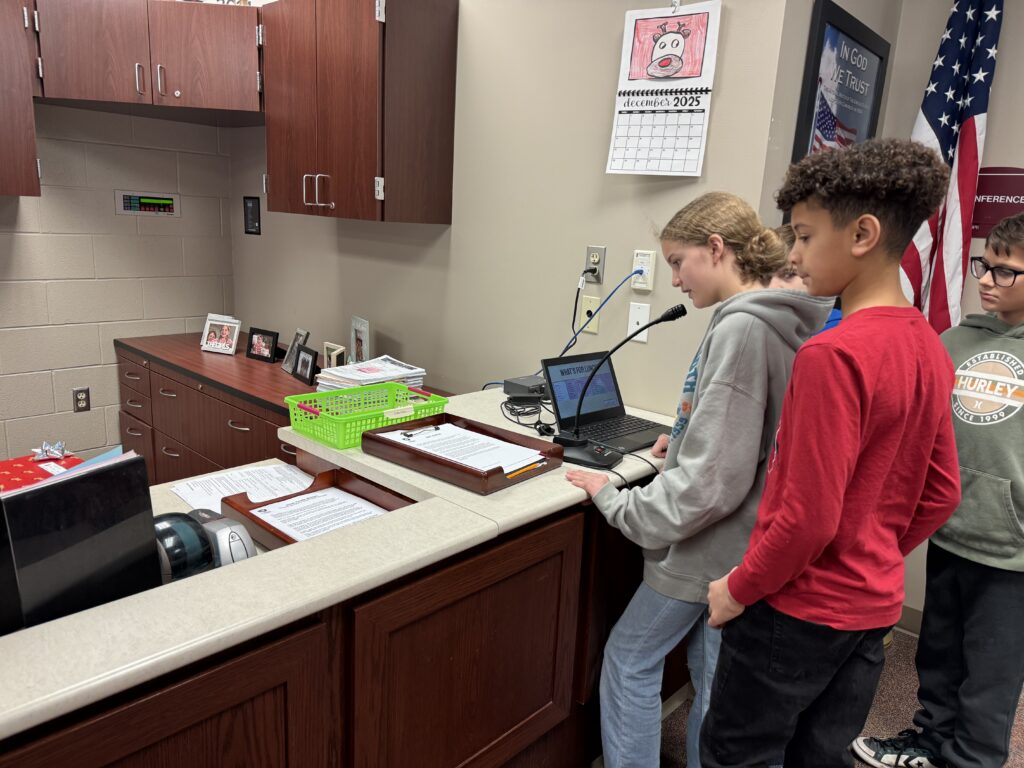
Across the building, teachers have the flexibility to adapt P2 to their schedules while still maintaining a shared experience. Some classrooms implement it during morning meetings or snack time, and others during transition times like after recess or lunch. It is integrated into our morning announcements led by our 5th graders and in shared spaces like the cafeteria, where the weekly focus is on display. It is also incorporated and reinforced during physical education class and weekly classroom counseling lessons. This adaptability ensures that P2 fits seamlessly into the rhythm of each grade level while remaining a unified schoolwide effort. Each year of implementation, teachers and staff become more confident with their integration of content with P2.
In kindergarten, P2 is intentionally woven into the middle portion of the day, as a cool down following lunch and recess. This timing has proven to be incredibly effective. After a stimulating block of unstructured play and social interaction, students may return to the classroom with big energy and big emotions. P2 provides the perfect bridge—helping students reset, refocus, and prepare themselves to reengage in learning.
We follow the P2 lessons using the provided slideshow format, which offers consistency and structure. For all of our learners but especially our youngest, this predictability is key. They know what to expect, and that sense of routine helps them feel safe and ready to participate. The lessons naturally encourage reflection, discussion, and connection, making them an ideal way to ease back into a calm and productive mindset.
How P2 Has Changed Our Classroom and School Dynamic
One of the most powerful impacts of P2 has been the shift toward a more cohesive and empathetic school environment. Students are no longer just reacting to situations—they are responding using strategies and language they’ve learned through P2.
In kindergarten classrooms, students are developing the ability to recognize their emotions and articulate how they feel. Instead of frustration turning into conflict, our students now have language and strategies to express themselves. Over time, this has led to fewer misunderstandings and stronger peer relationships.
The part that has been most exciting to witness is how deeply the content sticks. Vocabulary related to character strengths—such as integrity, kindness, perseverance, and gratitude—becomes part of students’ everyday language. Through repetition and consistent use, these words move from abstract ideas to lived behaviors.
Students across grade levels notice and celebrate character strengths in action. In the younger grades, our school mascot Harmony Hawk “looks” for examples of positive character strengths throughout the classroom. Students eagerly share moments when they see classmates demonstrating these strengths with Harmony. In older grades, students participate in initiatives like Secret Hawks, where peers anonymously recognize others for positive character in a “caught being good” format. These systems reinforce the idea that character matters—and that everyone plays a role in building a positive community.
Perhaps most importantly, P2’s focus on The Other Person Mindset has built students’ capacity to look outside themselves. Students are learning to pause, consider how their actions affect others, and respond with empathy. This mindset doesn’t stay confined to one classroom or grade level; it carries across the entire building.
School-wide, the culture has shifted toward one of understanding and acceptance. With the focus on The Other People Mindset, students are more aware of one another’s needs and more willing to offer support. Conversations about behavior are no longer just about rules; they are about character, choices, and growth.
The Impact on Students and School Culture
 Conversations matter. Teaching students how to regulate emotions, understand others, and communicate effectively lays the groundwork for lifelong success. In a world that is increasingly digital and less personal, the skills P2 reinforces are so very important– and both students and staff enjoy it!
One of the most meaningful impacts of P2 is the way it equips students with language— words to describe their feelings, their needs, and their experiences. When students have the vocabulary to express frustration, disappointment, excitement, or pride, they are better able to regulate their emotions and seek support when they need it, or to encourage peers to do the same. Teachers see students independently using P2 strategies during conflicts, problem-solving with peers, and reflecting on their choices.
Students genuinely look forward to P2 time each day. The lessons invite discussion, reflection, and personal connection, making them engaging even for our youngest learners. Kindergarten students eagerly participate, share insights, and apply what they learn to real-life situations.
As students progress through the grades, their understanding deepens. They don’t just recognize character strengths—they analyze them, apply them, and connect them to their experiences both in and out of school.
Family and Parent Connections
While P2 is implemented at school, its influence extends beyond the classroom walls. Families share that they appreciate having a shared language to talk about character and relationships at home. Because P2 reinforces values many students are already learning from their families, it strengthens the home-school connection rather than replacing it. The P2 Family Newsletters are incorporated into the weekly school-wide newsletter that is sent home, and the similar format (video, reflection questions) is helpful to continue learning at home.
Teachers also value the program’s ability to provide meaningful connections home. Parents often recognize P2 language being used by their children in everyday conversations, which reinforces learning and opens the door for deeper discussions about behavior, empathy, and responsibility.
Why We Chose P2
One of the main reasons we chose P2 is its ability to span the entire building in a meaningful way. From kindergarten through fifth grade, students are engaging with the same core character strengths each year, but in differentiated and developmentally appropriate ways. Previously, programming we implemented was not differentiated by grade level, but rather by grade spans– which could make the content stale year after year.
Equally important, P2 is easy for teachers to access and implement. The lessons are thoughtfully designed, flexible, and adaptable, allowing our staff to meet the unique needs of our students without adding unnecessary stress or preparation time. Having a program that supports both consistency and creativity has been invaluable. While we set a minimum expectation for teachers and staff for implementation, many go far above and beyond to integrate P2 as they see fit.
To further support staff, we organized all P2 weekly information into one centralized location. This ensures that teachers can easily access materials, stay aligned, and maintain continuity throughout the year. Visual tools like yearly slide overviews help keep everyone on the same page (see photo example).
P2 works because it is differentiated, flexible, and accessible. A single program meets the needs of a diverse range of learners while remaining easy for staff to implement. It supports positive relationships, builds community, and empowers students with the tools they need to thrive. P2 language appears throughout the building—on TVs in the cafeteria, during assemblies, and in informal conversations between students and staff. It is not a standalone program, but rather is integrated effectively to feel authentic rather than scripted. It is not just another program teachers have to implement- it is a large piece of who we are as a school.
Ultimately, P2 helps us create a school where students feel seen, heard, and valued—and where character is celebrated just as much as achievement. What started as a way to grow connections after the Coronavirus-19 Pandemic has grown into an integral part of our school community.