

Feathers of Bravery: A Character Strength Lesson in the Art Room
By Holly ClinardThis article was written by Holly Clinard, VAPA Assistant and art educator at Harold L. Woods Elementary in Clovis Unified School District, California. Holly is pursuing her Master of Arts in Teaching and a Single Subject Teaching Credential in Art at the Academy of Art University in San Francisco.
During Native American Heritage Month, our students took part in a lesson from The Positivity Project (P2) centered on the character strength of bravery. Inspired by the life and work of Native American artist Helen Hardin, students explored what it means to be brave. We taught the lesson in our art room, which allowed students to explore the idea of bravery by creating rather than only talking about it.
Connecting Character and Art
We began by studying Helen Hardin’s story, her courage as an artist, her commitment to honoring her cultural heritage, and her perseverance in expressing her identity through art. Students reflected on the bravery she demonstrated throughout her life and career, recognizing how leadership, perspective, purpose, and integrity shaped her work.
Studying a real artist also gave students something specific to relate to. Hardin made choices about how to represent her heritage in her work, and those choices carried risk. Students could see that bravery had a cost for her and that she went ahead anyway. Once students had spent time studying someone else’s bravery, they were ready to talk about their own.
Students Telling Their Own Stories
From there, the lesson became truly personal. Students shared their own stories about times when they needed to be brave, whether speaking up for themselves, trying something new, standing up for a friend, or facing a personal fear. These conversations created opportunities for connection and social intelligence within our classroom community. Students listened to one another with kindness and respect, demonstrating the Other People Mindset (OPM) in action.
Sharing a story about being afraid takes bravery of its own. The students who spoke were doing the thing they were describing (being brave), and their classmates were the reason it felt safe enough to try. OPM asks students to be present and give others their attention, and that is exactly what happened in our artroom. Their stories then became the material for their work.
Using Watercolor, Salt, and the Feather
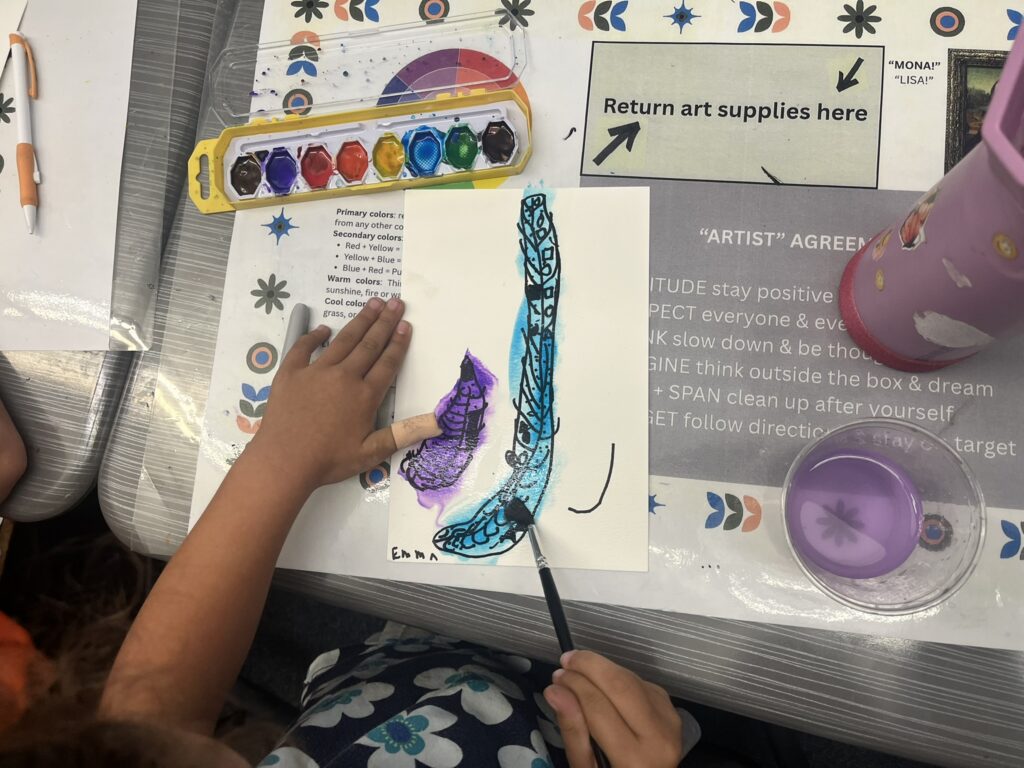
To express their understanding of bravery, students created watercolor feather artwork. The feather, an important symbol of bravery in Native American history, served as both an artistic and cultural connection to our learning. Using warm and cool colors, students visually represented what those brave moments felt like.
Warm and cool colors let students show what a moment was like without describing it in words. A student whose brave moment felt frightening might reach for cool blues, while a student remembering pride might reach for reds and oranges. The color choice became part of the story they had just told.
As they sprinkled salt onto the wet watercolor, they watched the colors transform and spread in unexpected ways. Salt pulls pigment as it absorbs water, so the paint moves on its own and leaves textures behind. Nobody could plan exactly what would happen with the paint. Students had to accept what it did and keep working with it, which is a brave thing to do in itself.
What Students Said Bravery Takes
The lesson sparked thoughtful and in-depth discussions across classrooms about what bravery means and what helps us act with courage. Students identified qualities such as perseverance, self-control, optimism, teamwork, and gratitude as supports for brave actions. They recognized that bravery means moving forward even when the fear is still there.
Ultimately, Feathers of Bravery blended art, culture, reflection, and character development. It celebrated Native American heritage while helping students see bravery in themselves and in one another. Students came in with a word and left with a story of their own attached to it, along with a space where they could experience positivity for themselves.