

What I Saw During 5th Grade Morning Meetings
By Caroline FourrierThis article was written by Caroline Fourrier, the 4th- and 5th-grade School Counselor at Rocky River Elementary in Cabarrus County Schools, North Carolina. The 2025–2026 school year is Caroline’s fourth at Rocky River and her sixth as a school counselor. Rocky River is one of 44 schools in Cabarrus County, a district that rolled out The Positivity Project (P2) across every campus the same year Caroline arrived.
One of my favorite things about being a school counselor is getting to connect with students on a personal level, leaving academics out of the conversation. I have always loved this part of the role and wish every educator had the chance to connect with their students this way. The Positivity Project (P2) has helped our teachers at Rocky River Elementary do exactly that.
Watching a Teacher Make P2 Her Own
This year I am the 4th and 5th grade counselor, and this is the third school year I have worked with this same group of students. I spent the previous two years teaching a class in the encore rotation. This year I am not in the rotation, which has let me join some of the P2 lessons our 5th grade teachers lead during morning meeting.
One of those teachers has taken the P2 lessons and made them her own, which has been very inspiring to me. She told me she has always seen the value in teaching character but has not always had the room for it, given everything else a classroom teacher carries. We both started at Rocky River the same year P2 rolled out in our county, and this year I have gotten to see the effect her lessons have had on our students.
The Quote of the Week
One of the ways this teacher makes P2 her own is by picking a student who embodies the “Quote of the Week.” Every week, she picks a quote based on the P2 character strength and has the art teacher make a poster for that student to take home. The class discusses the character strength throughout the week, and on Friday, a student is chosen to receive the poster. As the school year progresses, students really start to point out the character strengths in each other.
There are many Fridays when I make it a priority to be in her homeroom class so I can be part of the “Quote of the Week” presentation. One student received his poster during the week of Other People Mindset (OPM), Knowing My Words and Actions Affect Others. During the discussion, so many students had examples of a time this student made them feel better about themselves. Several talked about how he never seems to let anything get him down.
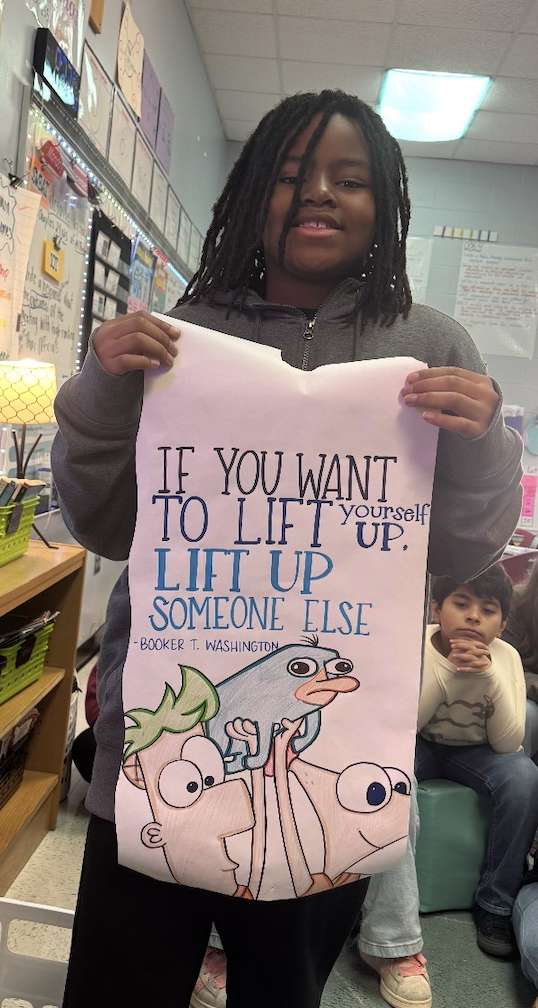
The class had an honest conversation about how they are not always the best behaved in certain encore classes, and how they notice this student never joins in and often tries to get everyone back on task. They talked about how he gets upset when the class gets a bad report, but takes it in stride and accepts whatever consequence is coming. They described it as quiet leadership. He does not argue or make excuses.
A Lesson That Finally Clicked
During one of the lessons on OPM, I asked the students what it meant to them. One student said:
If you’re nice to one another, you will receive kindness back.
I sat there and quietly tried to pick my jaw up off the ground. I had been trying to teach that exact lesson to these students for two years. When I asked what made it click this year, they told me it was because they get to see their classroom teachers model and teach the character strengths throughout the day.
The Student Shout-Out Basket
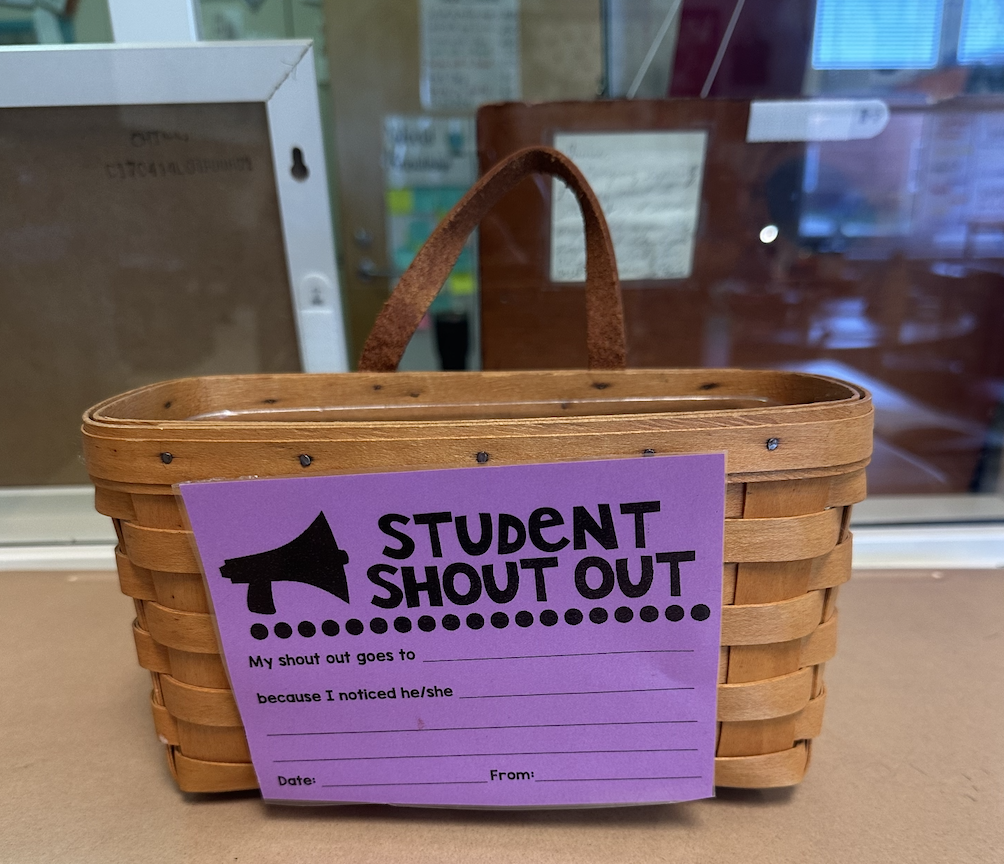
Another way this teacher brings in P2 is through student shout-outs. A basket sits in the back of her classroom where students fill out a slip to brag about a classmate. Our students get their P2 lessons in homeroom, but she opens the “Student Shout-Out” basket to the whole grade. As the ELA teacher, she reinforces P2 throughout the day in all of her blocks, working to create an environment of safety and mutual respect.
The students have enjoyed having a space where they can take time to encourage their classmates. One shout-out was addressed to a student I have been working with one-on-one, and he shared how much it meant to him. He has been struggling to feel like he fits in and has been working on being unapologetically himself, learning that there will always be people with something to say. He told me the morning P2 lessons have helped him connect with his classmates, and that he feels more connected this year than he did last year. He has also learned that plenty of his classmates worry about fitting in too, something he never would have known just by looking at them.
Students have told me that the way this teacher teaches P2 has helped them learn things they were not ready for before. One student said he is more willing to stop and think before reacting to a classmate. He admitted it is hard to remember in the moment, but easier when he is in front of his homeroom teacher. He said the closeness he feels to her makes him want to do well and stay out of trouble.
What the Teacher Sees
I also asked this teacher what she has noticed since bringing P2 into her classroom. She said the curriculum helps students with the academic piece as well as the personal side, and that the character strengths help her make connections in her ELA lessons. She can see the students’ wheels turning, then slowly sees their actions change.
She told me about one student she has seen tremendous growth in this year. A classmate sent him a shout-out. He has struggled to keep up with his work and stay engaged, and he still struggles, though he is starting to see the value in finishing what he starts.
She is candid with her students. She will tell them she is having an off day or does not feel well, and then keeps showing up and doing her work anyway. The biggest lesson she learned as a student, she said, was that her teachers were human too. Any time a teacher or boss showed her a willingness to be human, she respected them more. P2 gives teachers the framework to have those conversations with their students.
I said at the start that I wish every educator had the chance to connect with students the way counselors do. This year I have watched one do exactly that, and her students have told me what it has meant to them.