


Why Consistency Matters: How Character Becomes Culture
By Jeff BryanOne of the most common questions we hear from educators is simple: Why does The Positivity Project emphasize consistent, daily practice?
Then, we hear:
- Why short lessons?
- Why classroom teachers?
- Why train every adult in the building on the same vocabulary?
The answer comes down to something we sometimes forget about schools — and honestly, just about every group of people: Culture isn’t created by occasional events. Culture is created by what happens every day.
And that distinction is exactly why most character education efforts don’t work.
The Problem With the Assembly Model
Many schools approach character education the way they approach a pep rally. Bring everyone together once in a while, deliver a powerful message, and then send students back to class inspired.
The problem? It wears off fast.
That’s not to say that assemblies and guest speakers don’t matter. They can make a significant impact when paired with what students are already learning. But, inspiration without repetition is unlikely to change behavior. And changed behavior — sustained over time, across contexts — is what actually changes culture.
The Positivity Project is built around a different premise: character develops the same way any other skill does. Through repeated practice, consistent reinforcement, and enough time for it to become second nature.
Character Develops Through Repetition
Students do not develop character by hearing about strengths once or twice. They develop it through repeated reflection and practice — over time.
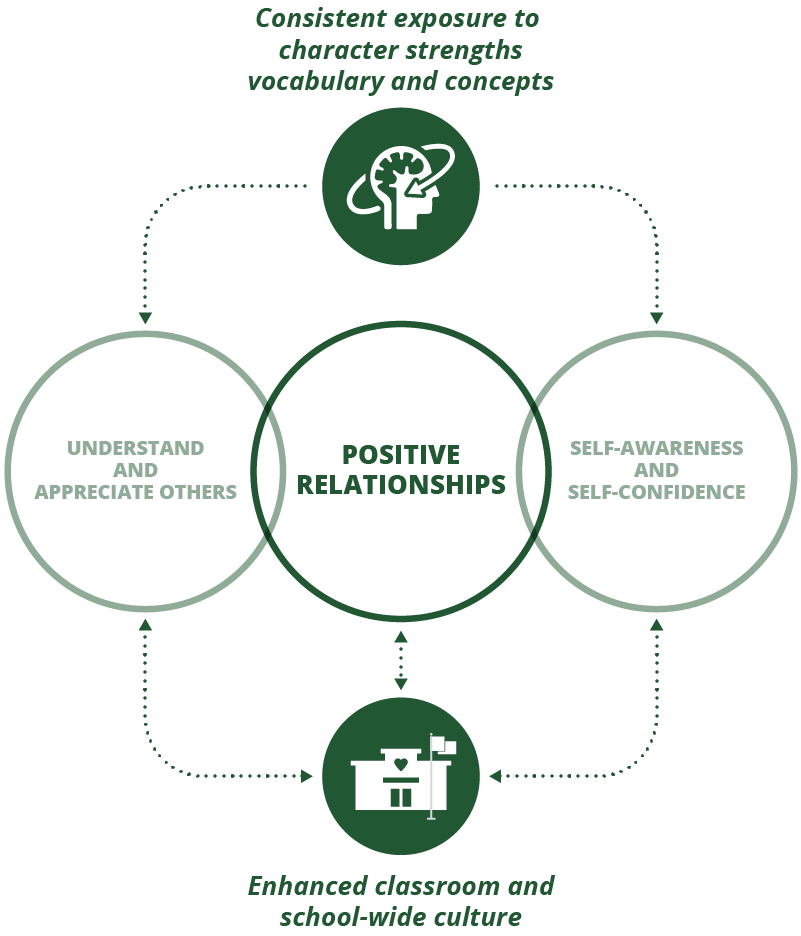
When students consistently encounter ideas like perseverance, social intelligence, humility, and gratitude, something important begins to happen. They start noticing those qualities in themselves and in others. They begin recognizing moments when those strengths are needed.
Over time, the vocabulary stops feeling like something from a one-time lesson and becomes the natural language to describe who people are.
That shift — from lesson to language — is critical. Because language shapes how we see the world.
The Power of Shared Vocabulary
Another important element of our model is that all staff members are trained in the vocabulary of character. When this happens, the same language spreads throughout the entire school community. It expands the “surface area” of when, where, and why students hear and use the character strengths vocabulary.
Students might hear a teacher reference perseverance during a difficult assignment. Later that day, a principal talks about integrity in a school assembly. That evening, a coach emphasizes humility after a big win.
The language becomes consistent across contexts. Students begin to realize that character is not something discussed only during a character ed lesson. Instead, it’s an expectation of how people treat one another throughout the school.
When that happens, the language becomes part of the culture.
Why Classroom Teachers Are the Right Messenger
In most schools, the adults who have the greatest influence on students are classroom teachers. They spend the most time with students and see them across the widest range of situations: academic challenges, group work, moments of frustration, moments of success.
When classroom teachers introduce character strengths vocabulary, it gets connected to real relationships and real experiences — not an abstract lesson delivered by someone students see once a year.
A teacher can say:
- “That took perseverance.”
- “That showed kindness.”
- “Think about what social intelligence might look like here.”
Those moments matter because they connect ideas about character to real behavior in real time. And over time, those small connections accumulate into something larger.
Why Time Is the Variable Schools Underestimate
School culture doesn’t change quickly. It develops gradually — through thousands of interactions over weeks, months, and years.
A second grader may understand gratitude in a simple way — like being grateful for her mom reading to her. A middle school student may begin to see how gratitude affects his friendships. A high school student may recognize how gratitude shapes the way a community comes together during hardship.
The concepts deepen as students grow. What starts as vocabulary becomes a way of seeing the world.
This is why consistency over time isn’t a nice-to-have — it’s the key to the whole model. Each lesson, each conversation, each casual hallway moment reinforces the same concepts. This organic repetition is the “intervention” that schools so often talk about.
This idea is well-established in both philosophy and psychology. As Dr. Chris Peterson, one of the founders of positive psychology, wrote:
Theorists as far back as Aristotle argued that virtue is the product of habitual action. One-shot positive psychology interventions can probably jump-start the process, but only sustained practice will make changes permanent.
From Lessons to Identity
At its best, character education moves beyond lessons entirely. Students begin to see themselves through the lens of character strengths.
A student might think:
- “I’m someone who perseveres.”
- “I want to be kind.”
- “I should show humility here.”
When students begin thinking this way, character has moved from something external — a rule, an expectation, a poster on the wall — to something internal. It becomes part of who they are.
And identity travels with students wherever they go: into new classrooms, onto sports teams, into friendships, and eventually into adulthood. That’s the difference between using a program and building a culture.
Culture Is Built One Interaction at a Time
Schools often talk about wanting to improve culture. But culture isn’t built in auditoriums once or twice a year. Culture is built in the small moments that happen every day:
- How students respond when someone struggles.
- How students treat one another after a disagreement.
- How students handle success, failure, and responsibility.
Those are the moments where character lives. By giving schools a shared vocabulary and a simple daily practice, The Positivity Project ensures those moments become opportunities for growth.
Over time, something powerful happens. Students begin recognizing the best in themselves and in one another. Teachers begin reinforcing those strengths naturally. And the language of character becomes part of how the school community understands itself.
That is when character education stops being a program and starts becoming culture.
Explore how daily character practice can transform your school culture. Start with our free lessons here. See how simple, consistent implementation makes a lasting difference for students and staff.